Why does Australia almost never change its Constitution?
Two Swiss farmers forced a national vote about cows' horns. Australians can't ask a question at all, and haven't said yes since 1977. Here's why.
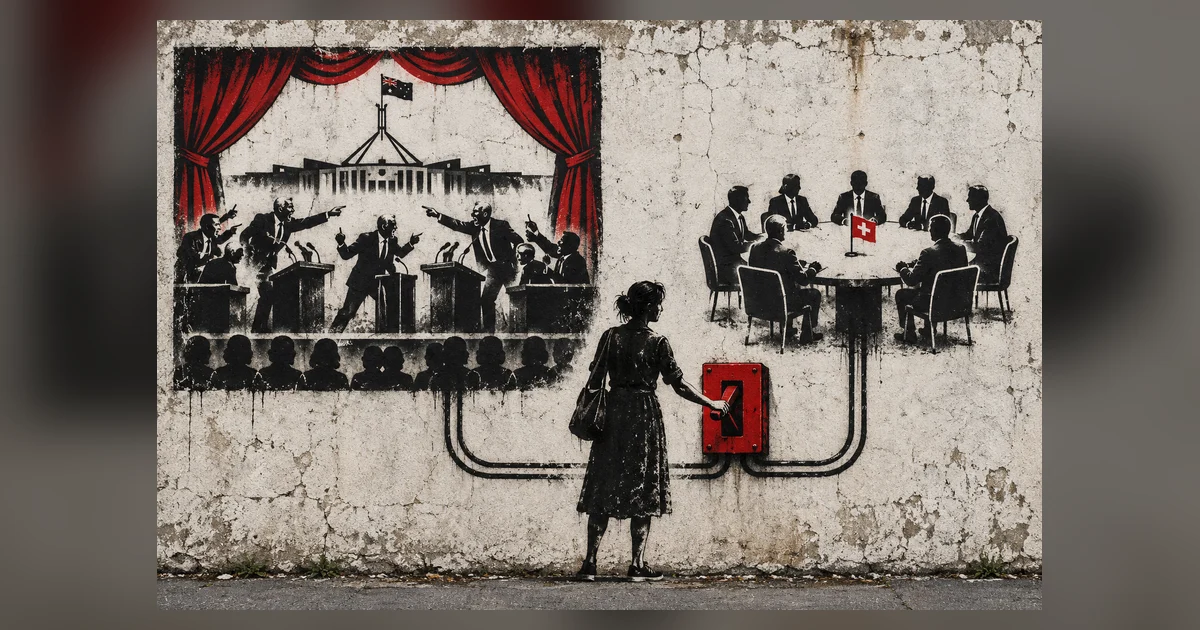
Art: Omxus Press
8 min read
 articleworld4u
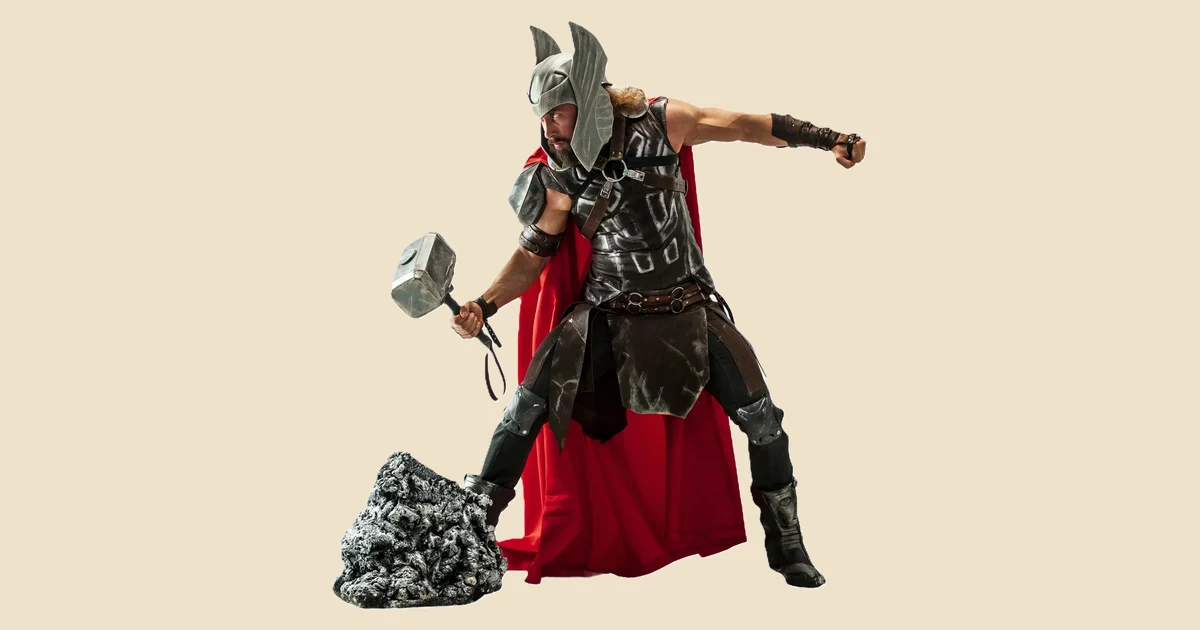
Art: Omxus Press
Picture a casual aged care worker whose back gives out at 44. For twenty years a small premium has left their super every month, so they lodge a disability claim. Then they read the test: can they still feed, dress or wash themselves? If so, the claim can fail.
Not technically a Roman. But this bloke would have got his grain today.
That test is real. A registered Roman citizen presented a token and took the grain home that day (Garnsey, 1988). An Australian worker gets a statement. It records money they earned, cannot reach, pay to have held, and are insured through without ever being asked.
About 8.8 million Australians hold life cover through super and 8.1 million hold total and permanent disability (TPD) cover (Association of Superannuation Funds of Australia, 2025). Most never chose it. The premiums come out of the balance for decades.
In 2019 the corporate regulator, ASIC, reviewed more than 35,000 TPD claims. Some members, disproportionately people in casual or non-standard work, get assessed under that "activities of daily living" test. Under it, 60% of claims were declined, against 12% of all other TPD claims. Those members "generally pay the same premium" (Australian Securities and Investments Commission, 2019).
Same premium, five times the refusals, and it lands on the people with the least money to fight.
You might assume insurers refuse claims to fatten margins. So we looked at the numbers every life insurer reports to the prudential regulator, APRA (Australian Prudential Regulation Authority, 2026).
| Group death and TPD cover, 12 months to | Premiums | Claims | Claims per premium dollar |
|---|---|---|---|
| 31 March 2026 | $6.25 billion | $5.81 billion | 93.0 cents |
| 30 June 2026 | $6.31 billion | $5.65 billion | 89.7 cents |
Insurers' result on this business over ten quarters was $25 million on $14.2 billion of revenue: 0.2%. They are close to break-even.
That makes it worse. Nobody is getting rich from that refusal. A paragraph of drafting decides who among the insured gets paid, and the pool isn't making the money that would make deleting it expensive. APRA doesn't publish results by definition, so we can't see the margin on those members, and ASIC's figures date from 2019. Your fund's wording may have changed. It's worth checking, which is where this ends.
Rome's grain dole, the annona, was aimed at a large urban class with no real political voice. The state could change those people's conditions or manage them. It managed them (Garnsey, 1988). The poet Juvenal thought it bought their silence: they now hoped only for "bread and circuses" (Juvenal, c. 100–127).
Whatever else you say against Rome, nobody made the poor wait forty years for the grain. Australia's version takes 12% of your wages before you see them (Australian Taxation Office, 2025) and charges about $34 billion a year in fees across the system (Super Review, 2025). The Productivity Commission found at least 1.6 million accounts in underperforming default products, which could erode nearly half a balance by retirement (Productivity Commission, 2018). Nearly half the pool, 48%, sits overseas (Deutsche Bank, 2025). Three insurers write 85% of the cover (Financial Newswire, 2025).
Saving for old age is a fine idea, and Australians have always put something aside. But what you hold isn't bread. It's a receipt for bread, redeemable at sixty, subject to conditions.
In the Netherlands, an employer keeps paying a sick worker for up to two years and must help them back to work. After that a public agency, not the insurer, assesses how much earning capacity they lost, and the benefit is an income scaled to the loss. After reforms built on that design, the yearly inflow into disability benefits fell from 1.5% of the insured population in 2001 to about 0.5% in 2012 (Koning & Lindeboom, 2015). The Dutch worker with the bad back gets help at week one, from someone with no stake in refusing. The difference isn't kindness. It's who decides, and when.
None of this needs new money. The money exists: $4.2 trillion of it, belonging to workers. ASIC has shown which paragraph to delete, and APRA's figures show it wouldn't break the pool. A country that prides itself on looking after its mates could do it this year.
You can start tonight. Log into your super and open the insurance guide. Search it for "activities of daily living" and "casual". If you work casually or part time, ring the fund and ask: "If I stopped work tomorrow, which definition would you assess me under?" Ask for the answer in writing. Then send your federal MP the 60% and the 12%.
You won't need the hammer. Just ring the fund.
Two Swiss farmers forced a national vote about cows' horns. Australians can't ask a question at all, and haven't said yes since 1977. Here's why.
Art: Omxus Press
A small lottery lifted student turnout by 32%. Paying for blood drove women away. What moves us is rarely what we say it is, and somebody designs it either way.
Art: Omxus Press
A dead salmon lit up in a brain scanner because the method expected it to. When a clinician's belief decides the finding, what choice is always safe?
Cover of The Lonely Whisper of the Wind (Omxus Press)