Why does Australia almost never change its Constitution?
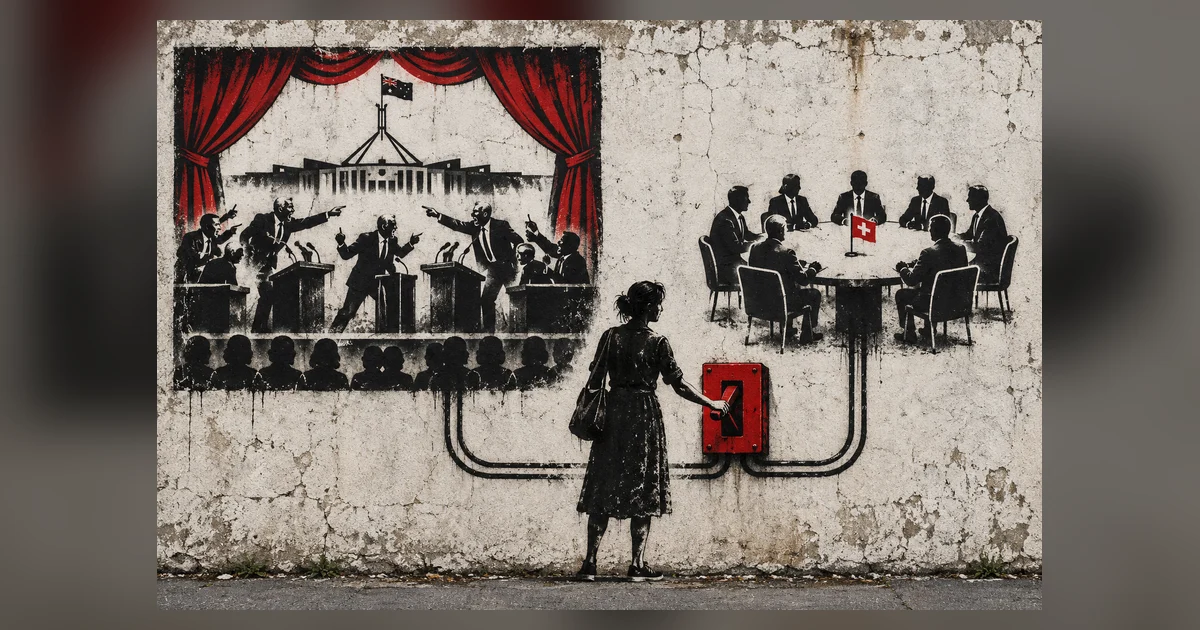
Two Swiss farmers forced a national vote about cows' horns. Australians can't ask a question at all, and haven't said yes since 1977. Here's why.
Art: Omxus Press
8 min read
 articleworld4u
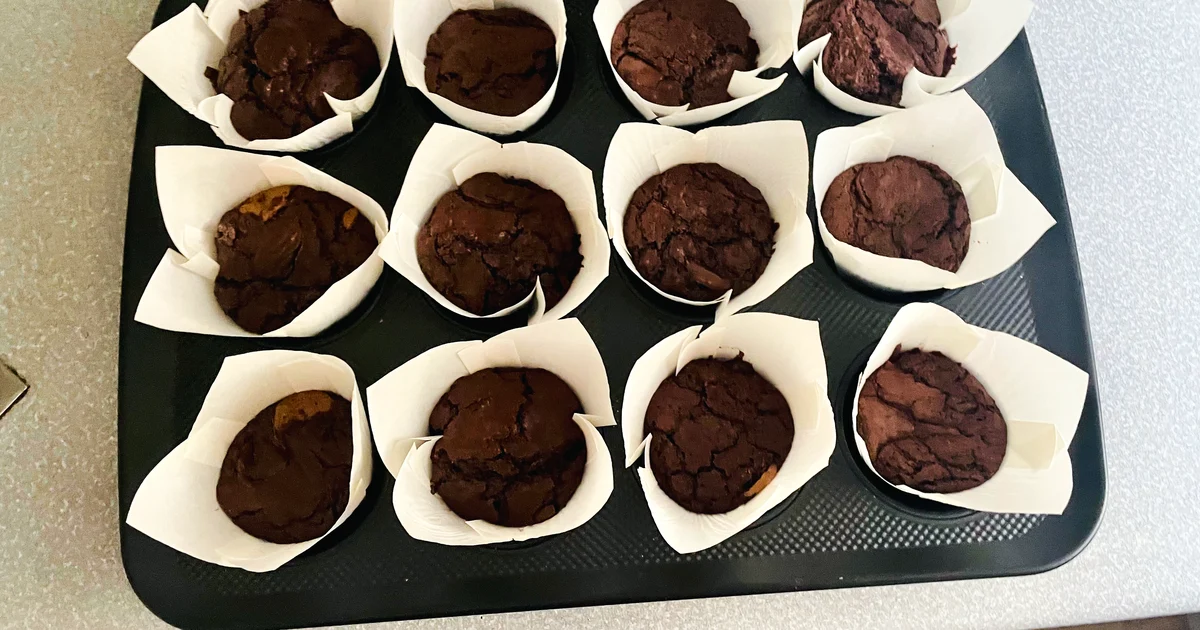
Photo: A. C. Applebee
On 8 June 2022 a volunteer who had kept a small piece of the world's software running for years told an impatient mailing list he was struggling. He added that he'd been working with someone called Jia Tan, who might take on more. Three weeks later Jia Tan was "practically a co-maintainer already" (Cox, 2024). Nobody has yet established that Jia Tan was a real person.
Would you eat one of these if a stranger handed it to you? What if a friend said the baker was fine?
The software was xz, a compression tool buried inside Linux systems around the world. Jia Tan had turned up in October 2021 with a small, sensible patch, then kept turning up. Other names, Jigar Kumar and Dennis Ens, wrote in to complain that the maintainer was too slow. Two years of helpfulness won commit access, then releases. In February 2024 Jia Tan shipped a hidden back door that targeted the login system of servers everywhere (Cox, 2024).
It failed because of one person's irritation. Andres Freund, a database developer, noticed the login program eating too much processor, taking about half a second to do what should take a hundredth of one, along with odd error messages in his tests. He kept pulling at it, and on 29 March told the world (Freund, 2024a). His own verdict on the catch: "Really required a lot of coincidences" (Freund, 2024b).
Nothing was cracked. No code was broken. Someone tired trusted someone kind, which is how nearly everything good in the world gets done.
Compare that with how Bitcoin talks about itself. Near the end of its white paper sits a table headed "Calculations". It gives the odds that an attacker with a tenth of the network's computing power could rewrite a payment after five confirmations: 0.0009137. The author printed the code too (Nakamoto, 2008). Ten years later two mathematicians solved the race exactly and found the shortcut a little optimistic for big attackers (Grunspan & Pérez-Marco, 2018). The correction isn't what matters. What matters is that a stranger with a laptop could make one.
Whatever you think of Bitcoin, its promise can be checked, and people aren't like that. Without some cost tied to identity, one adversary can pose as as many people as they like (Douceur, 2002), which is what those helpful names on the mailing list were. So any system meant to run on human trust must say what stops the fakes. A popular answer is in-person vouching: three people meet you and swear you're one real human. Nobody can write what they'll do down as an equation.
What you can do is refuse to bluff. Take a design with both layers, a record anchored in Bitcoin and an identity layer of three in-person vouches, and sort every claim into what's proven, what's bounded under stated assumptions, and what's only hoped.
Proven: the record. Reversing an anchored record means winning Nakamoto's race, so it inherits those odds. Twelve confirmations, about two hours, hold an attacker with 10% of the network under one in a million. Against 30% it takes 69 confirmations, 11.5 hours.
Bounded: the fakes. If each person can vouch 20 times in a lifetime, a thousand fake identities need at least 150 real accomplices; at three vouches, 1,000. There's a soft spot. An attacker picks whom to approach, and starts with the cheapest consciences. For 1,000 fakes the cheapest 150 cost just 2% to 18% of what that bound suggests, depending on how much people's prices vary. It still costs more with every fake, but less than it looks.
Hoped: independence. Three independent vouchers, each 1% likely to collude, would all collude one time in a million. But colluders coordinate. A weak shared tendency lifts that to 5.9 in a million. A moderate one lifts it about 200-fold. So the rule is that no two of your vouchers may know each other. In a group of 30 where half of all pairs are acquainted, 12.4% of voucher trios qualify. In a ring where everyone knows everyone, none do. That rule is sensible, and it's only a heuristic. Jia Tan was patient, and a patient attacker can recruit strangers.
How hard should consequences ripple back to the people who vouched? Too gentle and vouching means nothing. Too strong and one bad apple ruins people who've never met them. Send a third of the consequence to each of three sponsors, a ninth to each of theirs, for four generations. Each generation then carries at most one unit, and the whole network never pays more than five for one violation. That's arithmetic, and simulated networks from 1,000 to 100,000 members agreed with it. A direct sponsor bears one third, whether the network holds a hundred people or a hundred million.
And if neighbours are to answer emergencies for each other, doesn't clustering leave holes? It does leave holes, in places. But emergencies happen to people, and people are where the clusters are. At 1% adoption, simulated coverage at a person stayed around 92%, right where the simple model said. Clustering empties paddocks, not the houses of people who need help. What decides it is willingness: if one responder in five answers, covering 95% of people within 200 metres takes 6% of residents at suburban density.
Every number here comes from a model or a simulation, not from real people under real pressure. The theorems hold whatever happens. The bounds need data before anyone leans on them.
Bitcoin's security fails loudly if it fails at all. A vouching layer's fails quietly, one tired or bought vouch at a time, the way it did on that mailing list. And whether a sponsor who vouched in good faith should carry the same third as a careless one is a question of justice. The maths won't answer it for us.
So much of what makes life bearable runs on strangers trusting strangers, and much of what makes it miserable comes from someone abusing that. We won't fix that by trusting less. A world where nobody takes the patch, or lends the ute, or answers the door is its own disaster. We fix it by being honest about what's holding the weight.
Next time an app, a bank or a government says something is secure, ask three questions. What's proven? What's assumed? What happens to a person when the assumption fails? If nobody can say, that's your answer.
If you use free software, find out who maintains the small piece you depend on, and send them money or a kind word. They're often one tired person. And when something runs half a second slow and you can't say why, be Andres Freund. Pull the thread.
Eat the muffin. Find out who baked it.
Two Swiss farmers forced a national vote about cows' horns. Australians can't ask a question at all, and haven't said yes since 1977. Here's why.
Art: Omxus Press
A small lottery lifted student turnout by 32%. Paying for blood drove women away. What moves us is rarely what we say it is, and somebody designs it either way.
Art: Omxus Press
A dead salmon lit up in a brain scanner because the method expected it to. When a clinician's belief decides the finding, what choice is always safe?

Cover of The Lonely Whisper of the Wind (Omxus Press)