Why does Australia almost never change its Constitution?
Two Swiss farmers forced a national vote about cows' horns. Australians can't ask a question at all, and haven't said yes since 1977. Here's why.
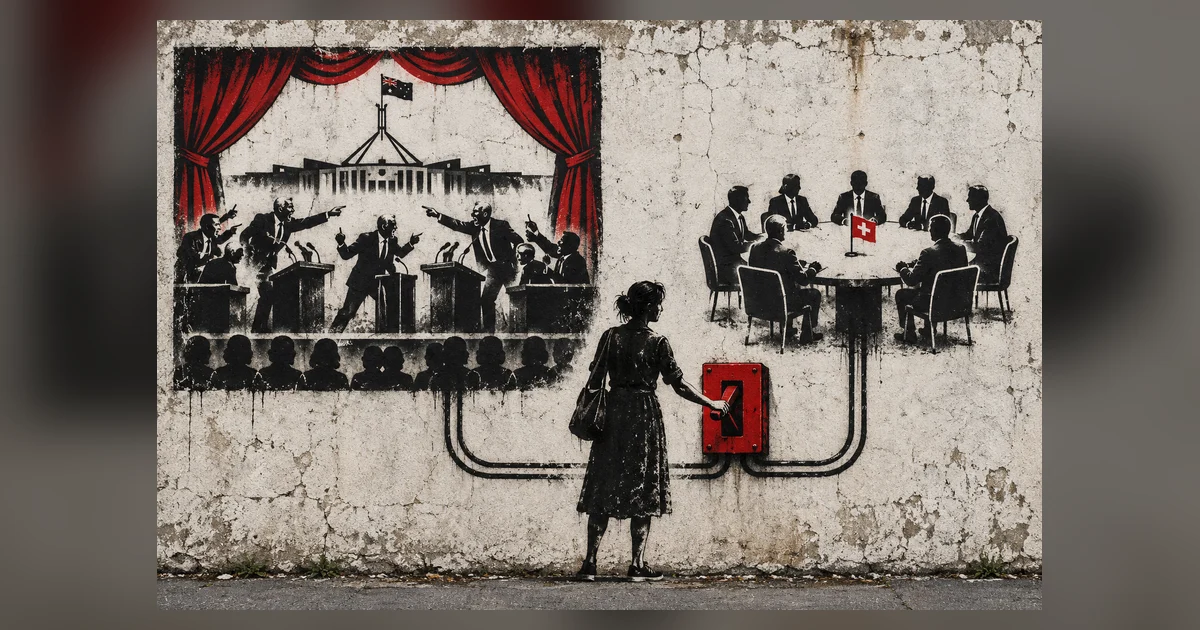
Art: Omxus Press
8 min read
 articleworld4u
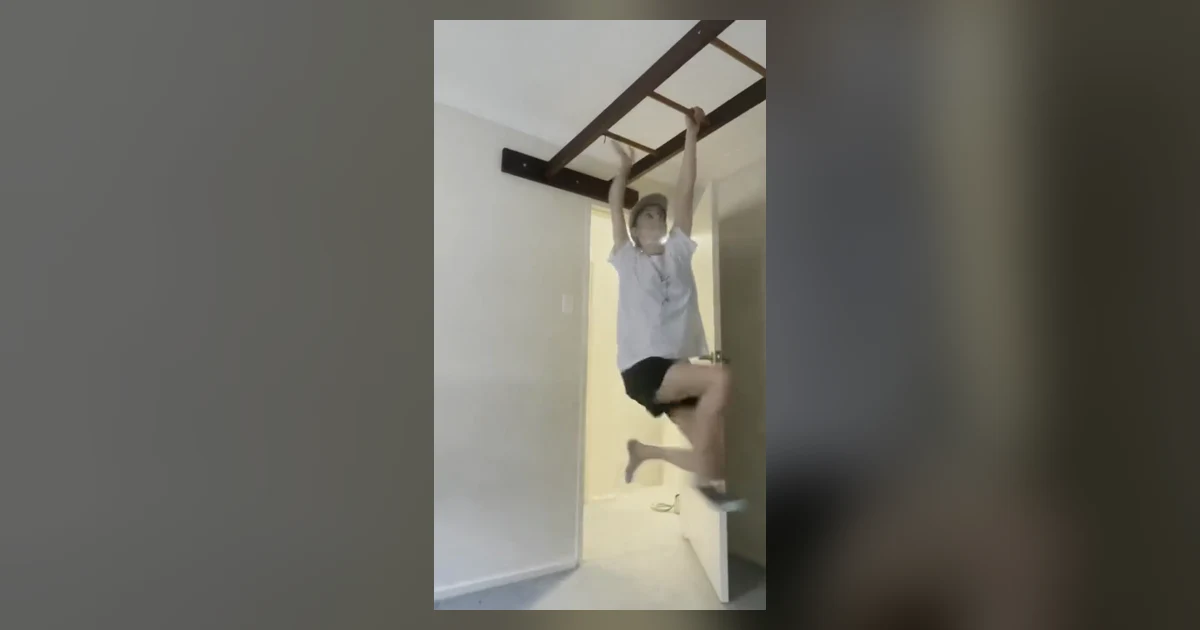
Video: A. C. Applebee
In May 1902 a young French naval officer, Georges Hébert, was serving on the cruiser Suchet when Mount Pelée erupted over Saint-Pierre in Martinique and about 30,000 people died within minutes. He'd walked that town's market shortly before, listening to its frightened women (Hébert, 2002). Now he was among those helping get the survivors off the coast. And what he saw stayed with him: in the worst hour of their lives, some people could run, swim, climb and carry, and most could not.
An adult, a doorway, a set of monkey bars, no reason.
Hébert spent the rest of his life on that. His "natural method" trained people to walk, run, jump, climb, lift, throw, balance, swim and defend themselves, outdoors, for a purpose. The motto handed down from it is "be strong to be useful". He'd noticed what modern gyms still miss. Bodies aren't for looking at. They're for getting your mother up the stairs.
A hundred and twenty years on, most of us would fail his test without leaving the office. And we'd fail for a reason that has nothing to do with character. Look at what we build.
Every industrialised country builds playgrounds with climbing frames and monkey bars, because children need physical play for motor development, growth and balance (Pellegrini & Smith, 1998). At about twelve, with the move to secondary school, the bars vanish. Nobody assessed that the child no longer needs to climb. The public space between school, work and home just gets benches.
The cut-off has no basis in biology. Muscle mass falls by about 3% to 8% a decade after 30 (Volpi et al., 2004). Bone thins when unloaded (Frost, 2003). The ageing body needs these loads more, and gets a chair and a gym membership it won't use. Take gorillas: an accredited zoo that kept them on flat concrete with nothing to climb would face public outrage. We're primates too, and we spend 87% of our time inside buildings and 6% in vehicles (Klepeis et al., 2001). The gorillas get monkey bars. The humans get escalators.
Between 2011 and 2014 the United States national health survey asked thousands of adults to squeeze a handgrip dynamometer as hard as they could (National Center for Health Statistics, 2013). Add the best reading from each hand and line the results up by age. Grip peaks at 30 to 39: 98.2 kilograms in men and 61.9 in women. By 70 to 80 it's 29% lower in men and 31% lower in women. Those are different people at one time, not the same people followed through life.
Why care about a squeeze? The survey links to death records through 2019. Among 6,248 adults aged 40 and over, each 5 kilograms less grip went with a 24% higher risk of death from any cause, comparing people of the same age, sex, height and body mass. The weakest quarter had about three and a half times the risk of the strongest quarter of their own sex. Illness weakens grip, of course, so leave out everyone who died in the first two years. The figure barely moves. A study of almost 143,000 adults in 17 countries found a smaller but similar pattern, 16% per 5 kg (Leong et al., 2015), and European guidance now uses low grip as the first test for sarcopenia, the muscle loss behind falls, fractures and lost independence (Cruz-Jentoft et al., 2019).
Grip is mostly a marker. Nobody's saying a stronger handshake buys extra years by itself. But it's a marker of something a body can keep or lose, and that loss decides whether you get to stay in your own home.
We've told people to exercise for fifty years. More than a quarter of adults worldwide didn't reach the aerobic guideline in 2016, and the share didn't fall from 2001 (Guthold et al., 2018). Meanwhile the place changes how much people move. In 14 cities across 10 countries, adults in the most activity-friendly neighbourhoods did 68 to 89 more minutes of real activity a week, measured by accelerometer, than those in the least friendly ones (Sallis et al., 2016).
Blaming people for sitting in a world designed for sitting is like blaming fish for being wet. We don't ask people to purify their own water. We build treatment plants.
Picture a standard for movement, the way we have them for lighting and seating. Hanging bars at bus stops, parks and building entrances, at several heights, with soft ground beneath. Low climbing walls in parks and at stations. Balance beams and stepping stones along walking routes. Textured ground beside a smooth accessible path, so that you choose your challenge, with every climb an addition to stairs and lifts, never a replacement.
Finland has already played with this. In Rovaniemi, the play-equipment maker Lappset and local researchers built a playground for people aged 60 and over (Lappset, n.d.). A German medical newspaper reported University of Lapland researchers finding significant gains in balance, speed and coordination among 40 people aged 65 to 81 after three months. That's a small study with a company's name on the swing set, so hold it loosely. But a far larger body of trials says balance and functional exercise cuts falls in older people by 24% (Sherrington et al., 2019).
The usual objection is liability. Yet we give bars to children, the group most likely to fall, and manage it with fall heights, soft surfaces and maintenance. A city with no bars still pays for its residents' falls. It's just moved the bill from the courts to the hospital.
What this can't say is that bars alone would have kept anyone's grip. Nobody has run that trial. Nobody ran one to prove public drinking fountains prevent dehydration, either.
Getting old is hard, and losing the use of your own body makes it harder. A lot of that loss gets built into the places we live, and those can be built differently.
Georges Hébert's idea was never about looking good. One day someone you love will need lifting. Be strong to be useful, and build a town that helps you.
Nobody needs a reason. Go on.
Two Swiss farmers forced a national vote about cows' horns. Australians can't ask a question at all, and haven't said yes since 1977. Here's why.
Art: Omxus Press
A small lottery lifted student turnout by 32%. Paying for blood drove women away. What moves us is rarely what we say it is, and somebody designs it either way.
Art: Omxus Press
A dead salmon lit up in a brain scanner because the method expected it to. When a clinician's belief decides the finding, what choice is always safe?
Cover of The Lonely Whisper of the Wind (Omxus Press)