Yes. When a common, lethal method becomes harder to reach, fewer people die, and most
of them don't switch to another method. It's one of the best-tested findings in suicide
prevention.
If you're thinking about suicide, or worried about someone, call Lifeline on
13 11 14 or text 0477 13 11 14 (Australia, 24 hours). In an emergency, call 000.
The British gas story
Through the 1950s, most British homes ran on coal gas, and coal gas is full of carbon monoxide.
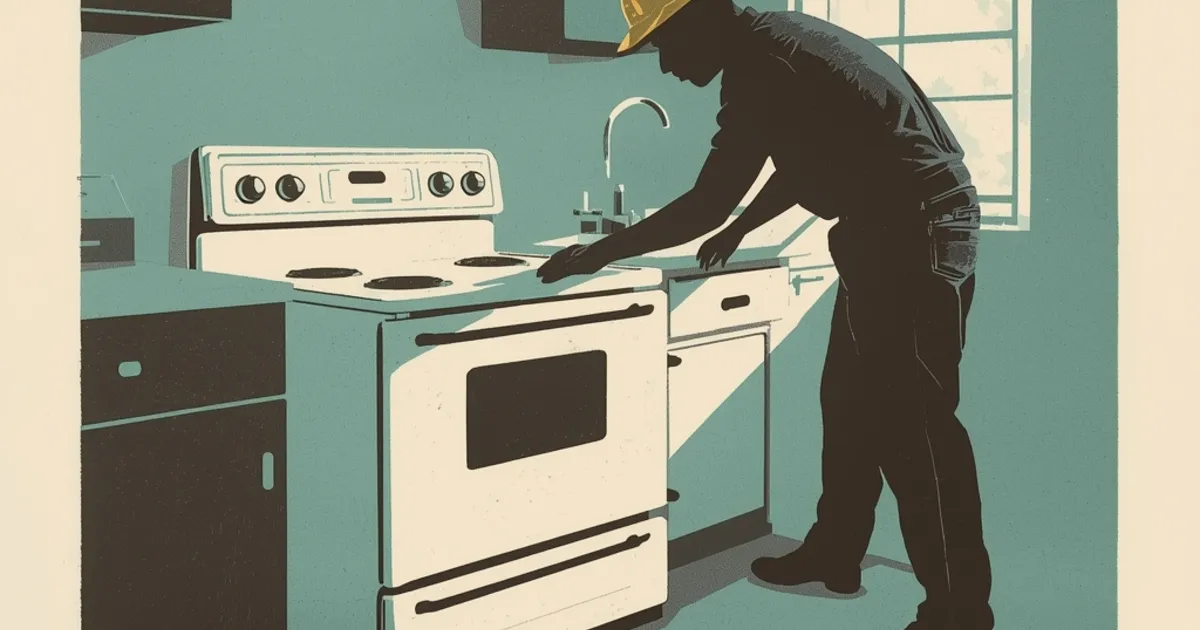
Putting your head in the oven was the most common way people in Britain ended their lives.
In 1963, domestic gas accounted for more than 40 per cent of suicides in England and Wales.
Over the next decade the gas supply changed, first to gas made from oil and then to natural
gas from the North Sea. The reason was cost, not health. The new gas carried almost no carbon
monoxide, and the oven stopped being lethal.
The psychiatrist Norman Kreitman tracked what followed. Suicide by domestic gas fell in every
age group and in both sexes, in step with the fall in carbon monoxide. Suicide by other methods
rose in some groups, most clearly in young people, but not by enough to make up the difference.
The total suicide rate fell at every age. Kreitman concluded that neither better psychiatric care
nor volunteer services could explain a change that size.
The criminologists Ronald Clarke and Pat Mayhew later put numbers on it. Between 1963 and
1975 the yearly count of suicides in England and Wales fell from 5,714 to 3,693, a drop of about
a third, while suicide rose in most of Europe. Few of the people who lost the gas option found
another way to die.
Why taking away one method works
The common belief runs: "If someone wants to die, they'll find a way." The gas data says
that's usually wrong, and there are two reasons.
- Many suicidal crises are short. A study in Houston interviewed 153 people who
survived nearly lethal attempts. For about one in four, less than five minutes passed between
deciding and acting. A crisis that brief doesn't wait while the person hunts for another method.
- Methods differ hugely in how lethal they are. When people do switch, the
second method is often less likely to kill them, so more survive and get a chance at help.
Surviving matters because most people who survive a crisis don't die by suicide later. In 1978
the researcher Richard Seiden followed up 515 people stopped from jumping off San Francisco's
Golden Gate Bridge between 1937 and 1971. About 94 per cent were still alive, or had died of
something other than suicide, years later.
The same pattern, again and again
| What changed | Where | What happened |
|---|
| Coal gas replaced with low-carbon-monoxide gas | England and Wales, 1960s–70s |
Total suicides fell by about a third |
| The most toxic pesticides banned, step by step to 1995 | Sri Lanka |
The suicide rate, which had risen eightfold since 1950, halved by 2005 |
| Paracetamol sold in smaller packs (1998) | England and Wales |
Deaths from paracetamol overdose fell by an estimated 43 per cent over the next 11 years |
| Barriers and nets at jumping sites | 18 studies, several countries |
Jumping suicides at those sites fell by 86 per cent |
A review in The Lancet by Paul Yip and colleagues sums up the pattern: some people
look for another method, many don't, and those who do tend to choose methods that kill fewer
people.
What it doesn't mean
Restricting the means doesn't replace care. People in crisis still need someone to talk to,
and treatment still helps. Means restriction buys time for those things to work.
It also isn't perfect. Kreitman saw suicide by other methods rise among young people, and
barrier studies look hard for people moving to nearby sites. The finding is that total deaths
fall, not that nobody ever substitutes.
Its strength is that it works for everyone at once. Nobody has to ask for help, be spotted,
or get past stigma. The environment changes, and fewer people die.
What you can do at home
Most means restriction happens at home, not through laws.
- Clear out old medicines. Any Australian community pharmacy takes back unwanted
or expired medicines for free and destroys them.
- Keep only what you need, and lock up the rest if someone in the house is
struggling.
- Firearms: if someone is at risk, ask a trusted person to hold them, or store
them locked away from ammunition, for now.
- Ask directly. "Are you thinking about suicide?" doesn't put the idea in
anyone's head. It opens the door to help, and to a talk about making the house safer for a
while.
Removing a lethal method during a hard patch can decide who is still here when the crisis
passes.
Sources
- Clarke, R. V., & Mayhew, P. (1988). The British gas suicide story and its criminological implications. Crime and Justice, 10, 79–116. https://doi.org/10.1086/449144
- Gunnell, D., Fernando, R., Hewagama, M., Priyangika, W. D. D., Konradsen, F., & Eddleston, M. (2007). The impact of pesticide regulations on suicide in Sri Lanka. International Journal of Epidemiology, 36(6), 1235–1242. https://doi.org/10.1093/ije/dym164
- Hawton, K., Bergen, H., Simkin, S., Dodd, S., Pocock, P., Bernal, W., Gunnell, D., & Kapur, N. (2013). Long term effect of reduced pack sizes of paracetamol on poisoning deaths and liver transplant activity in England and Wales: Interrupted time series analyses. BMJ, 346, f403. https://doi.org/10.1136/bmj.f403
- Kreitman, N. (1976). The coal gas story: United Kingdom suicide rates, 1960–71. British Journal of Preventive and Social Medicine, 30(2), 86–93. https://doi.org/10.1136/jech.30.2.86
- Pirkis, J., Too, L. S., Spittal, M. J., Krysinska, K., Robinson, J., & Cheung, Y. T. D. (2015). Interventions to reduce suicides at suicide hotspots: A systematic review and meta-analysis. The Lancet Psychiatry, 2(11), 994–1001. https://doi.org/10.1016/S2215-0366(15)00266-7
- Return Unwanted Medicines. (n.d.). About the RUM Project. https://returnmed.com.au/about-us/
- Seiden, R. H. (1978). Where are they now? A follow-up study of suicide attempters from the Golden Gate Bridge. Suicide and Life-Threatening Behavior, 8(4), 203–216. https://doi.org/10.1111/j.1943-278X.1978.tb00587.x
- Simon, T. R., Swann, A. C., Powell, K. E., Potter, L. B., Kresnow, M., & O'Carroll, P. W. (2001). Characteristics of impulsive suicide attempts and attempters. Suicide and Life-Threatening Behavior, 32(Suppl.), 49–59. https://doi.org/10.1521/suli.32.1.5.49.24212
- Yip, P. S. F., Caine, E., Yousuf, S., Chang, S.-S., Wu, K. C.-C., & Chen, Y.-Y. (2012). Means restriction for suicide prevention. The Lancet, 379(9834), 2393–2399. https://doi.org/10.1016/S0140-6736(12)60521-2





,_Mo_i_Rana,_Norway_2017-10-09_a.jpg)
