Why does Australia almost never change its Constitution?
Two Swiss farmers forced a national vote about cows' horns. Australians can't ask a question at all, and haven't said yes since 1977. Here's why.
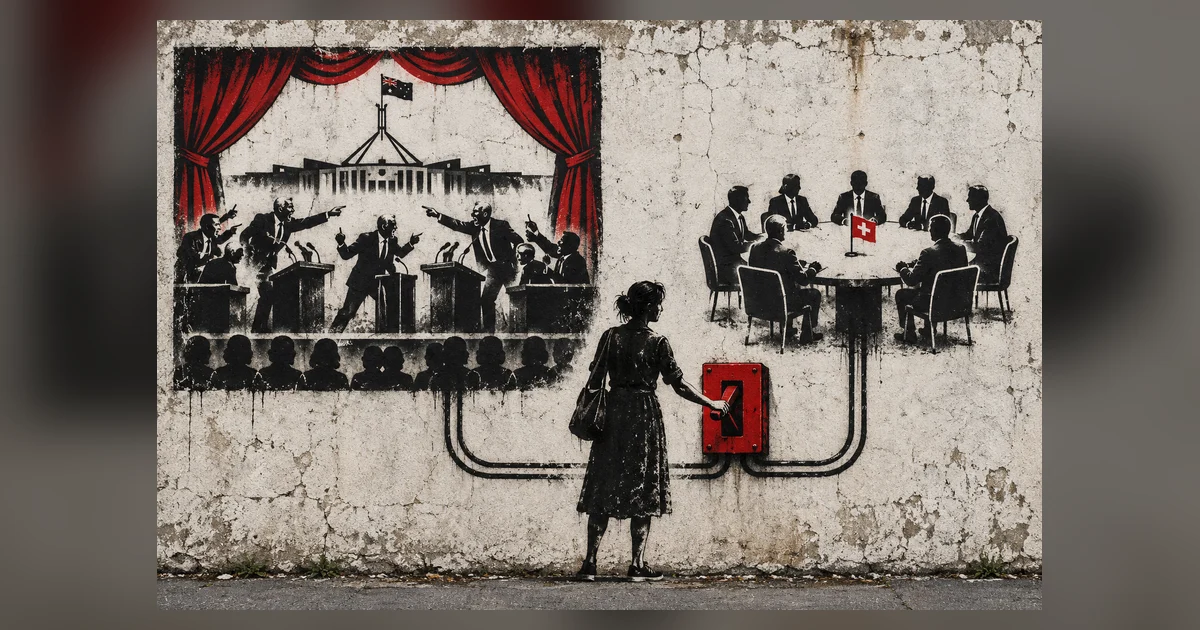
Art: Omxus Press
8 min read
 articleworld4u
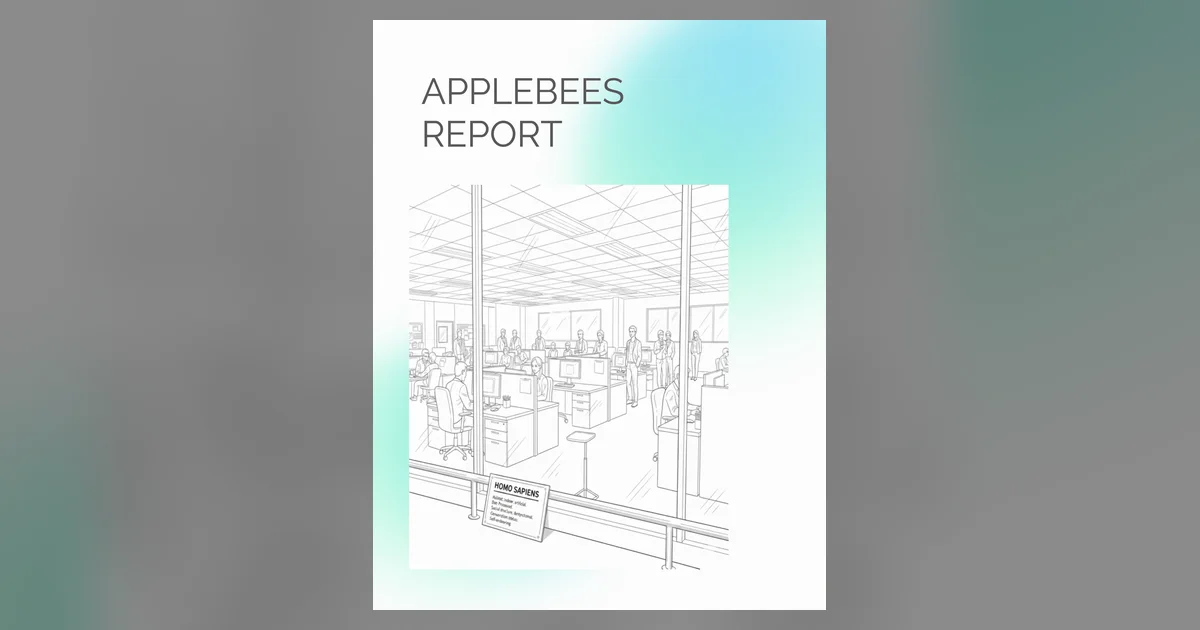
Cover of The Applebee Report (Omxus Press)
In 1991 a young doctor named Bill Thomas took over a nursing home in New Berlin, New York, where he kept seeing the same thing: residents worn down by what he called loneliness, helplessness and boredom. He didn't change their prescriptions first. He ordered 100 parakeets.
He brought in dogs, cats, rabbits, chickens, plants and children from the neighbourhood, past the regulations and the sceptical staff (Harvard Magazine, 2008). The birds, the story goes, arrived before their cages, and for a while the home's hair salon was full of them (Gawande, 2014). Then people who hadn't spoken much started talking, about the birds, to the birds. People asked to take a dog for a walk. Thomas and others reported less medication and fewer deaths, though one home isn't a trial, and later studies of his model have been mixed.
What Thomas did was walk into a room and stop asking what was wrong with the people in it. The same question drives The Applebee Report, a satirical book narrated by a zookeeper hired to make the human species "happy and flourishing". It's worth an evening of your time, because it's funny, and because it won't let you off.
The book opens with a boss shouting at a zookeeper: "I want our 30 million humans happy and FLOURISHING. You hear me?" The zookeeper's answer: "I nodded emphatically and looked most concerned."
A zookeeper starts with the animal. List what the species needs, measure what the enclosure gives it, close the gap. When an animal paces, the keeper doesn't lecture the animal about willpower. The keeper changes the cage.
Applebee walks the human enclosure with that question and finds the same pattern in each room. Cities of strangers produce a loneliness epidemic that the United States Surgeon General has called a public health crisis (Office of the Surgeon General, 2023). Childhood play is removed, and play deprivation goes with anxiety, depression and aggression in adolescence (Gray, 2011). Each system began as a decent impulse. Policing began as a wish for safety, and schools as a wish for children to thrive. Each scaled past the size where care travels by relationship, and control replaced trust.
The justice chapter puts it plainly. Imagine a hospital where 40 to 60 percent of patients came back within three years with the same illness. Nobody would call it a success or build more of them. We'd ask what it was doing to its patients.
In the United States, 83% of people released from state prisons in 2005 were arrested again within nine years (Alper et al., 2018). In Australia, 42.5% to 45.7% of released adults were back in prison within two years, every year from 2016-17 to 2024-25, at $119,147 per prisoner per year (Productivity Commission, 2026).
The report's second claim is that none of this needs inventing. Housing First gives people a home before asking anything of them, and a review of the cost literature finds savings in other services offset part of what it costs (Ly & Latimer, 2015). Finland made it national policy in 2008 (Pleace et al., 2015). The book's line: "The homework has been done. It needs to be copied, not invented."
Applebee gives three reasons, the same in every chapter. People inside a broken system often benefit from it staying broken. "Tough on crime" has become a self-concept, so data about prisons feels like an attack on the person. And a constant feed of threat has convinced people that change is impossible, so "the inmates believe escape is impossible, so they never try the door."
The book ends on a modest recommendation: one community of 150 people, built from components already proven elsewhere, offered rather than imposed, and measured. Take it as a joke or a plan. Bill Thomas's parakeets were a joke too, until people started talking.
The Final Report to that boss says what the zookeeper saw: "I have watched a child pull her hair out under a desk while nobody saw." And: "I have watched a prisoner rub the sore leg of another prisoner because that is what you do when someone near you is in pain, even when a voice on a speaker tells you to stop." The verdict follows: "They are not broken. The enclosure is broken." It ends: "The bus could come tomorrow, Mr. Reggie. For any of them. For any of us. Start."
Next time someone in your life is pacing, snapping or going quiet, ask the keeper's question before anything else: what's missing in here? Company, sleep, sunlight, something to do, someone who needs them? Then change one thing.
If someone you love is in care, ask what the place has that's alive, and offer to bring something: a dog, a plant, a grandchild, you. And look up your state's return-to-prison rate in the Productivity Commission's Report on Government Services, Part C. Ask your MP whether a hospital with those numbers would get more beds.
Two Swiss farmers forced a national vote about cows' horns. Australians can't ask a question at all, and haven't said yes since 1977. Here's why.
Art: Omxus Press
A small lottery lifted student turnout by 32%. Paying for blood drove women away. What moves us is rarely what we say it is, and somebody designs it either way.
Art: Omxus Press
A dead salmon lit up in a brain scanner because the method expected it to. When a clinician's belief decides the finding, what choice is always safe?
Cover of The Lonely Whisper of the Wind (Omxus Press)