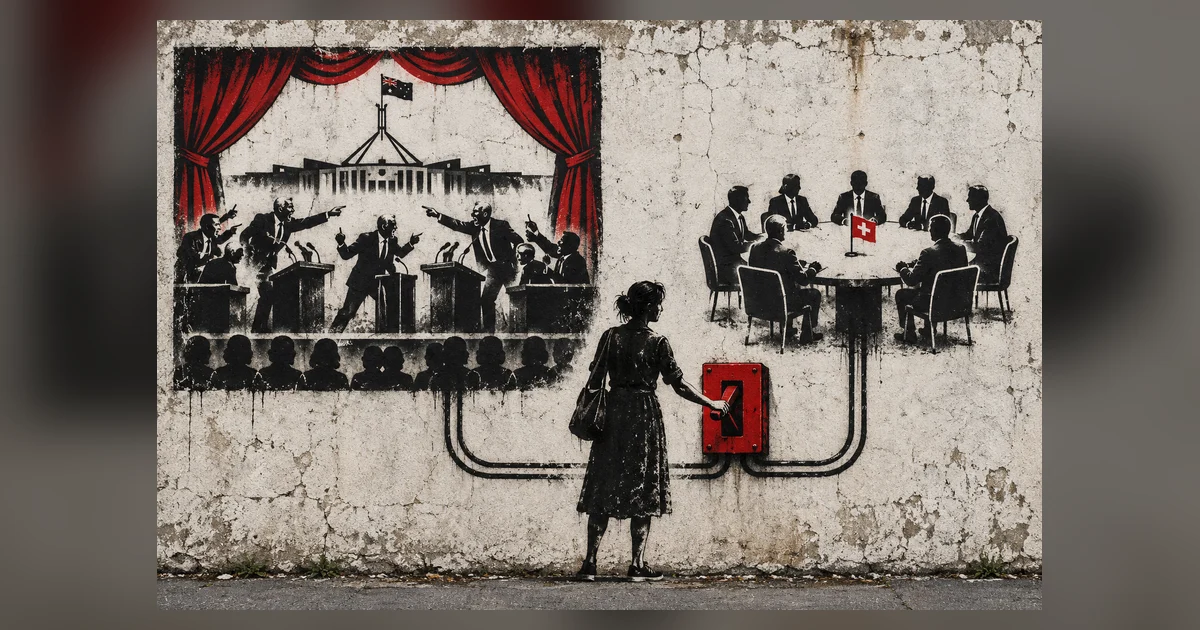
Why does Australia almost never change its Constitution?
Two Swiss farmers forced a national vote about cows' horns. Australians can't ask a question at all, and haven't said yes since 1977. Here's why.
Art: Omxus Press
8 min read
 articleworld4u
Art: Omxus Press
In a hospital in Pennsylvania, some patients recovering from gallbladder surgery looked out at a small stand of trees. Others looked at a brown brick wall. Nobody chose. It depended on which bed was free. Which window would you want, and which one are you sitting at?
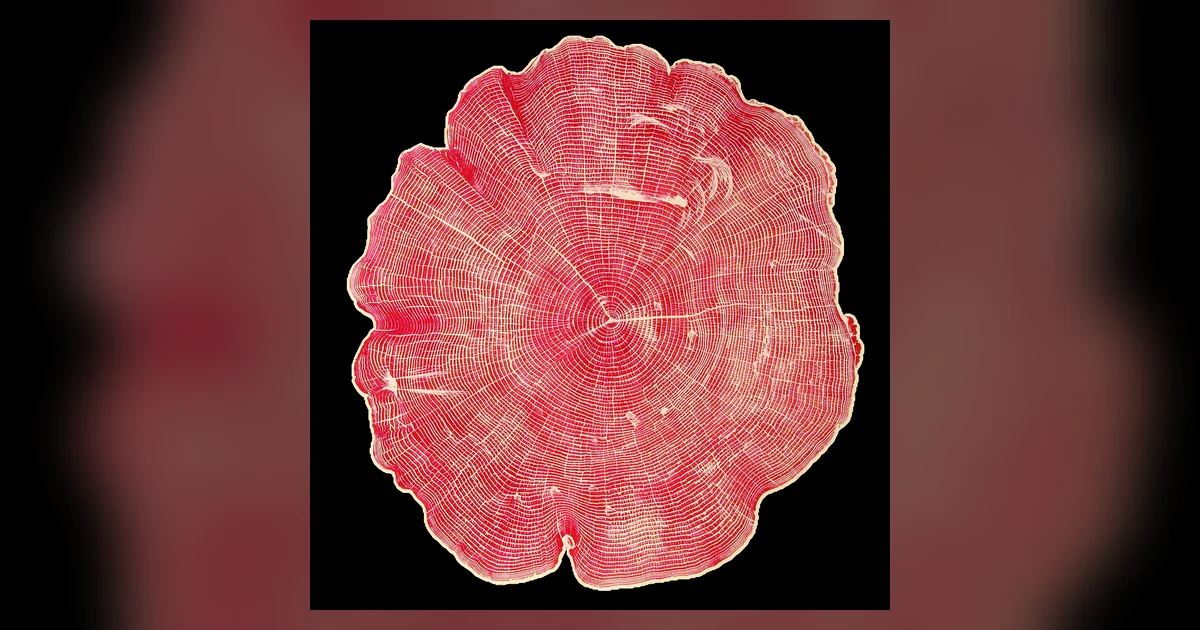
Every ring here is a year this tree spent outdoors. How many of yours did you?
Roger Ulrich went through the hospital's records from 1972 to 1981 and paired each tree-view patient with a wall-view patient of the same sex, similar age and similar health. The 23 who looked at trees left hospital after 7.96 days on average. The 23 who looked at the wall stayed 8.70. The tree group needed fewer doses of strong painkillers, and the nurses wrote fewer negative notes about them (Ulrich, 1984).
They never touched a leaf. They never breathed forest air. They looked through glass. It was enough to change how fast a body healed.
It was a small study in one hospital, and it couldn't rule out everything. But hold that thought, because most of us now live on the brick-wall side. What if eyes, immune systems, attention, lungs, skin and body clocks aren't six separate problems, but six symptoms of one condition: enclosure?
In the early 1990s, a US government survey asked 9,386 people to walk through the previous day, place by place. They spent 87% of their time inside buildings and about 6% inside vehicles (Klepeis et al., 2001). Canada repeated it in 2010 and found almost the same (Matz et al., 2014).
The American Time Use Survey lets you check that again. It has recorded where Americans do each thing in their day every year since 2003: a quarter of a million diary days (U.S. Bureau of Labor Statistics, 2025). The answer is starker. People aged 15 and over spend 97.8% of the day inside a building or a vehicle. Even counting every minute of outdoor work and sport as outside, it is 96.3%. On two days in three, people recorded no time outdoors at all. Young adults got the least: 21.5 minutes a day at 18 to 24.
For almost all of human history, people lived outside. Our eyes, skin, immune systems and body clocks were tuned there. Each one is now missing something it was built to receive, and each one shows it.
The US national health survey asks adults how much time they usually spend in the sun, then tests their blood for vitamin D (National Center for Health Statistics, 2020). Take 13,511 adults aged 20 to 59. Among people who usually got no sun, 13.2% were low enough to be at risk of deficiency. Among people who got two to four hours, 5.4% were. At the same age, sex, ancestry, weight, season and supplement use, no sun meant twice the odds of deficiency. Almost a third of working adults said they spent no time in the sun at all on work days.
That's a snapshot, not an experiment: sun time is self-reported, race stands in imperfectly for skin colour, and the causal step (UVB on skin makes vitamin D) comes from established physiology, not from this survey. The time-use survey cannot see a person's own yard, so outdoor time is a floor. It starts at age 15, so it misses the ages when eyes and immune systems are set.
A modern zoo would not keep a primate indoors almost all its life, under a hundredth of the light of its natural home, in air thick with its own breath, on a flat floor, with no plants and no dirt. Welfare inspectors would intervene. We built that enclosure for ourselves and called it normal.
None of this needs a new drug, and it shouldn't all land on you. A minimum standard for any building people live in could be short: daylight strong enough to set the body clock where people sit, indoor carbon dioxide under 800 ppm with windows that open, a view of vegetation, sky or water from every occupied room, two hours outdoors a day for school children, and floors and stairs that aren't all flat. Ulrich's patients needed a view. The Guangzhou children needed 40 minutes. The campers needed a week of real light.
A supplement isn't the answer either. In the VITAL trial, 25,871 adults given vitamin D had no fewer cancers or heart events than those given placebo (Manson et al., 2019). Low vitamin D may partly be a marker of a life spent indoors, which also lacks daylight, movement and air. A pill replaces the hormone. It doesn't replace the day.
Open a window, right now. Then take your coffee outside tomorrow, and walk the phone call instead of sitting through it. Get the kids out for the extra 40 minutes, because that's the one with a trial behind it. Ask your school what its classroom CO2 reading is, and whether anyone has ever measured it. If someone you love is in hospital or in care, move the bed to the window if you can, or bring a plant.
And this is Australia, so be careful with it. Our sun causes more skin cancer than almost anywhere on earth. Check the UV: when it's 3 or above, cover up and find shade, which still counts. Early morning and late afternoon light does most of what your eyes and body clock want.
A zoo would be told to fix this enclosure. Nobody's going to tell us. Start with the window.
The tree never got a choice about outdoors. We do.
Two Swiss farmers forced a national vote about cows' horns. Australians can't ask a question at all, and haven't said yes since 1977. Here's why.
Art: Omxus Press
A small lottery lifted student turnout by 32%. Paying for blood drove women away. What moves us is rarely what we say it is, and somebody designs it either way.

Art: Omxus Press
A dead salmon lit up in a brain scanner because the method expected it to. When a clinician's belief decides the finding, what choice is always safe?
Cover of The Lonely Whisper of the Wind (Omxus Press)