Why does Australia almost never change its Constitution?
Two Swiss farmers forced a national vote about cows' horns. Australians can't ask a question at all, and haven't said yes since 1977. Here's why.
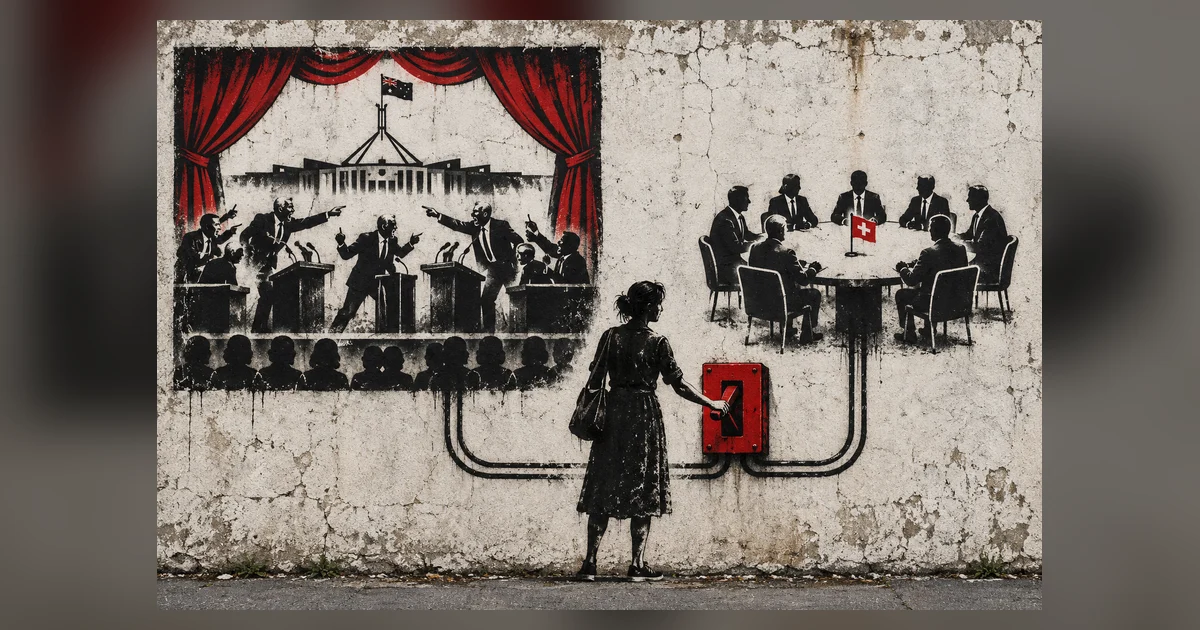
Art: Omxus Press
8 min read
 articleworld4u
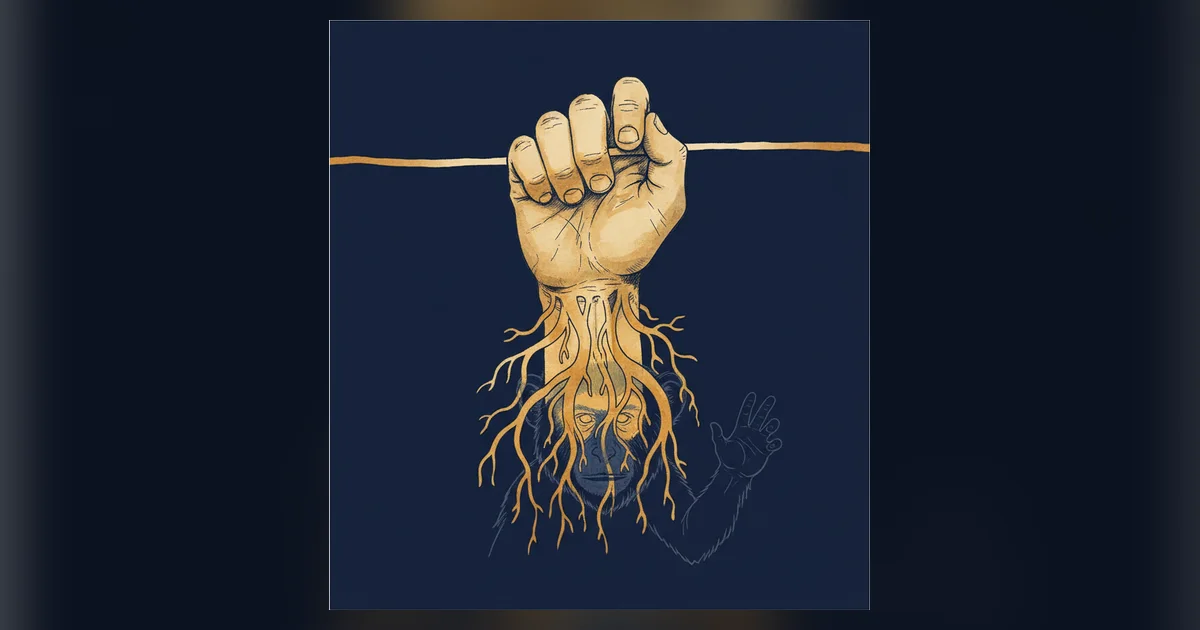
Cover of The Rebel Had No Google (Omxus Press)
In November 1957, days after the fuss of winning the Nobel Prize had begun to settle, Albert Camus sat down and wrote to an old man in Algiers. "When I heard the news," he wrote, "my first thought, after my mother, was of you." Who was he, and what did he do?
Camus had a dead father, a silent mother and a grandmother who beat him with a whip. His father died at the Marne. His mother, partly deaf, cleaned other people's houses. In a two-room apartment in colonial Algiers there were no books. A schoolteacher named Louis Germain noticed the poor kid, gave up his own time to coach him, went to the apartment and argued with the grandmother, and got him a scholarship (Camus, 1995; Todd, 1997).
"Without you," Camus told him, "without the affectionate hand you extended to the small poor child that I was, without your teaching and example, none of all this would have happened."
In 1951 that child wrote a book about the person who says no. He had a pen and damaged lungs, and no datasets. Seventy years of research later, what he said keeps turning out to be true. And if you're reading this at 2am because something feels wrong and you can't say what, this is for you. That feeling in your chest has a very long history.
Camus believed rebellion isn't selfish: when you refuse an injustice done to you, you refuse it for everyone (Camus, 1956). In 2003 two primatologists trained capuchin monkeys to swap a token for food. When one monkey got a grape and its neighbour got a cucumber for the same work, the cucumber monkey often refused the deal, sometimes throwing the cucumber back (Brosnan & de Waal, 2003). Fairness detection runs deep in the primate line, older than language (Brosnan & de Waal, 2014). The feeling in your chest when something is wrong isn't weakness. It's ancient.
Camus watched people who fought tyranny become harsh once they held power, and concluded that the structure corrupts the person in it. Sociologists later named the pattern: organisations drift toward the shape of the ones around them, whatever they say they stand for (DiMaggio & Powell, 1983). Prisons show it plainly. In Norway, about a fifth of people are back under a correctional sentence within two years (Kristoffersen, 2013). In Australia, 43% of people released in 2021–22 were back in prison within two years (Productivity Commission, 2026). On 30 June 2025, six in ten people in Australian prisons had been in prison before (Australian Bureau of Statistics, 2025). Same species. Different architecture.
Camus's Sisyphus pushes his rock knowing it will roll back, and the rebellion is in the pushing (Camus, 1955). The data adds a second move: change the hill. When Britain replaced toxic coal gas with natural gas in the 1960s, the country's suicide rate fell by 30%, because one common means had gone (Kreitman, 1976). Give homeless people a home first, with no conditions, and about four in five keep it (Tsemberis et al., 2004). Scorn is necessary. So is the redesign.
The famous story that 38 people watched Kitty Genovese's murder in 1964 and did nothing doesn't hold up: people called, and one held her as she died (Manning et al., 2007). When people feel watched and accountable, more witnesses can mean more help, not less (van Bommel et al., 2012). Alert-the-neighbour systems make use of this. After a phone app started alerting trained volunteers in one urban US county, bystander CPR rose from about 43% to 57% of cardiac arrests (Hwang et al., 2025). Camus's rebel says no, and doesn't walk away.
In his Nobel speech Camus said his generation's task was "keeping the world from destroying itself" (Camus, 1957). One place that matters is in court, where people are judged by how they look while they talk. Across 206 studies, people tell lies from truths 54% of the time, barely better than a coin (Bond & DePaulo, 2006). The signs the world trusts to spot a liar (Global Deception Research Team, 2006) mostly don't match what liars do (DePaulo et al., 2003).
Camus warned that the rebel in the tyrant's chair becomes the tyrant. Switzerland built a chair that can't be worn as a crown: 710 national votes in 178 years, and on the 699 where the Federal Assembly gave a recommendation, the people went the other way in 25.2% of them (Année Politique Suisse, 2026). The chair advises. The people decide.
A caution. Science doesn't back all of it: the mortality-salience effect, which people often link to Camus, didn't reproduce in a large multi-site replication (Klein et al., 2022). And a philosopher being right about something isn't proof of anything. He just got there first.
He said: I rebel, therefore we exist. He meant nobody says no alone. A boy from Belcourt with tuberculosis and a dead father, and a teacher who showed up, proved one person refusing to accept the unacceptable can be enough.
So do two things. Look around for the kid nobody's noticed: at your school, your club, your kid's team, next door. You needn't change their life. Learn their name and tell them they're good at something. Louis Germain had a class to teach and did it anyway.
Then find your Louis Germain, and write to them. Do it while they're alive. Camus's letter took one page, and Germain kept it for the rest of his life.
Année Politique Suisse. (2026). Swissvotes: The database on the Swiss popular votes [Data set]. University of Bern. https://swissvotes.ch/page/dataset
Australian Bureau of Statistics. (2025). Prisoners in Australia, 2025. ABS.
Bond, C. F., Jr., & DePaulo, B. M. (2006). Accuracy of deception judgments. Personality and Social Psychology Review, 10(3), 214–234. https://doi.org/10.1207/s15327957pspr1003_2
Brosnan, S. F., & de Waal, F. B. M. (2003). Monkeys reject unequal pay. Nature, 425, 297–299. https://doi.org/10.1038/nature01963
Brosnan, S. F., & de Waal, F. B. M. (2014). Evolution of responses to (un)fairness. Science, 346(6207), 1251776. https://doi.org/10.1126/science.1251776
Camus, A. (1955). The myth of Sisyphus and other essays (J. O'Brien, Trans.). Knopf.
Camus, A. (1956). The rebel (A. Bower, Trans.). Knopf.
Camus, A. (1957). Banquet speech. Nobel Prize in Literature 1957.
Camus, A. (1995). The first man (D. Hapgood, Trans.). Knopf.
DePaulo, B. M., Lindsay, J. J., Malone, B. E., Muhlenbruck, L., Charlton, K., & Cooper, H. (2003). Cues to deception. Psychological Bulletin, 129(1), 74–118. https://doi.org/10.1037/0033-2909.129.1.74
DiMaggio, P. J., & Powell, W. W. (1983). The iron cage revisited. American Sociological Review, 48(2), 147–160. https://doi.org/10.2307/2095101
Global Deception Research Team. (2006). A world of lies. Journal of Cross-Cultural Psychology, 37(1), 60–74. https://doi.org/10.1177/0022022105282295
Hwang, C. W., Meyer, A. J., Harmon, I., Climenhage, B. P., Nordhues, E. M., & Becker, T. K. (2025). Impact of a 9-1-1-integrated mobile app on bystander CPR. Journal of Clinical Medicine, 15(1), 5. https://doi.org/10.3390/jcm15010005
Klein, R. A., Cook, C. L., Ebersole, C. R., Vitiello, C., Nosek, B. A., Hilgard, J., Ahn, P. H., Brady, A. J., Chartier, C. R., Christopherson, C. D., Clay, S., Collisson, B., Crawford, J. T., Cromar, R., Gardiner, G., Gosnell, C. L., Grahe, J., Hall, C., Howard, I., . . . Ratliff, K. A. (2022). Many Labs 4: Failure to replicate mortality salience effect with and without original author involvement. Collabra: Psychology, 8(1), 35271. https://doi.org/10.1525/collabra.35271
Kreitman, N. (1976). The coal gas story. British Journal of Preventive and Social Medicine, 30(2), 86–93. https://doi.org/10.1136/jech.30.2.86
Kristoffersen, R. (2013). Relapse study in the correctional services of the Nordic countries. EuroVista, 2(3).
Manning, R., Levine, M., & Collins, A. (2007). The Kitty Genovese murder and the social psychology of helping. American Psychologist, 62(6), 555–562. https://doi.org/10.1037/0003-066X.62.6.555
Productivity Commission. (2026). Report on government services 2026, Part C: Justice. Australian Government.
Todd, O. (1997). Albert Camus: A life (B. Ivry, Trans.). Knopf.
Tsemberis, S., Gulcur, L., & Nakae, M. (2004). Housing First, consumer choice, and harm reduction. American Journal of Public Health, 94(4), 651–656. https://doi.org/10.2105/AJPH.94.4.651
van Bommel, M., van Prooijen, J.-W., Elffers, H., & Van Lange, P. A. M. (2012). Be aware to care. Journal of Experimental Social Psychology, 48(4), 926–930. https://doi.org/10.1016/j.jesp.2012.02.011
Two Swiss farmers forced a national vote about cows' horns. Australians can't ask a question at all, and haven't said yes since 1977. Here's why.
Art: Omxus Press
A small lottery lifted student turnout by 32%. Paying for blood drove women away. What moves us is rarely what we say it is, and somebody designs it either way.
Art: Omxus Press
A dead salmon lit up in a brain scanner because the method expected it to. When a clinician's belief decides the finding, what choice is always safe?
Cover of The Lonely Whisper of the Wind (Omxus Press)