In 1990 a pink dye was banned from lipstick because it gave rats thyroid tumours. It stayed in lollies, icing and glacé cherries for another thirty-five years. We didn't want it on our lips, and we kept feeding it to our kids.
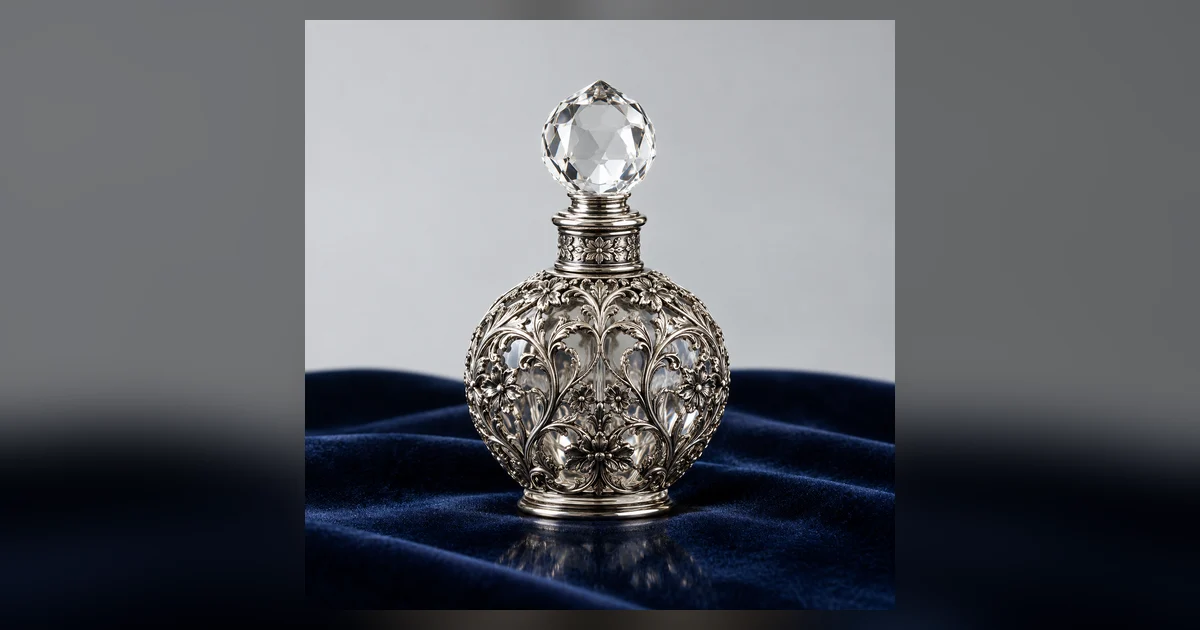
A pretty bottle tells you nothing about what's inside it. Neither does a lolly.
The dye and the lipstick
FD&C Red No. 3 makes the cherries in a fruit cup unnaturally pink. In 1990 the US Food and Drug Administration stopped its use in cosmetics: studies had found thyroid tumours in male rats, and US law forbids any colour additive shown to cause cancer in animals. The same agency left it in food. In January 2025, after a consumer group petitioned in 2022, the FDA revoked it for food too, and gave manufacturers until January 2027 to stop (U.S. Food and Drug Administration, 2025).
The FDA said it didn't think the dye harmed people at the levels they ate. Maybe so. But the law was explicit, the evidence sat in the agency's files, and the dye did nothing for the food but colour it. It still took thirty-five years. Every other case is harder than this one.
A little grave in Tulsa
Most of us assume someone checked. We picture government scientists testing a new ingredient first. For medicines, that picture is true, and we know exactly why.
In 1937 a Tennessee company dissolved a new drug in a sweet solvent that tasted of raspberries, and tested it for flavour, not safety. The solvent was a poison, close kin to antifreeze. More than 100 people died, many of them children. A mother in Tulsa wrote to President Roosevelt about her daughter's first visit to a doctor: "All that is left to us is the caring for her little grave" (Ballentine, 1981). The next year the United States began requiring proof of safety before a drug could be sold.
Food never got its little grave. The harms are slow, spread thin and hard to trace back to one lolly. So food still runs the other way: an ingredient is innocent until proven guilty, and the people eating it carry the cost of the wait.
Marking your own homework
In the United States a company can declare its own ingredient "generally recognised as safe" and sell it without telling the FDA. Telling the agency is voluntary. When researchers read the 451 declarations companies did send between 1997 and 2012, every safety decision had been made by someone the company chose and paid: its staff, its consultant or a panel it picked. One expert sat on 128 panels (Neltner et al., 2013).
The FDA's inventory is public, so we read all of it: 1,360 notices from 1998 to October 2026. Of the 1,311 closed, the FDA had "no questions" about 1,065. Companies withdrew 226 before any answer came. Twenty drew a letter saying the notice gave no basis for calling the ingredient safe, and only three of those came after 2012. A withdrawn notice changes nothing, because the company can go on declaring the ingredient safe by itself. For every written "no" in 28 years, eleven companies quietly walked away before one could be written.
What ends up in us
Glyphosate is the most-used weedkiller on Earth. One arm of the World Health Organization calls it a probable cause of cancer; European and US regulators say it is unlikely to be. While they argue, people carry it. The US government's health survey found it in the urine of 81.2% of Americans aged six and over in 2013–2014, and children carried the most (Ospina et al., 2022). The survey can't say what those doses do. It says nearly everyone is in the experiment, the smallest bodies most of all, and nobody signed up.
Same evidence, opposite answers
Europe reads the same studies and decides differently. When its food safety authority couldn't rule out that titanium dioxide, a whitener in sweets, damages DNA, Europe took it off the permitted list in 2022. Australia's regulator, reading the same evidence, kept it. After a British trial found a mix of common food colours made young children more hyperactive (McCann et al., 2007), Europe put a warning on the label. Australia and the United States did not. The science is shared. What differs is who must prove what.
It has been done before
New Zealand already flipped the burden once. Before 2013, makers of "legal highs" sold a new chemical until it was banned, then sold the next one. The Psychoactive Substances Act 2013 made every new product unlawful until its maker proved, with evidence it paid for, that it carried a low risk of harm. It stumbled when lawmakers later barred animal tests, leaving makers no way to prove anything. The lesson there is to leave the proof possible, not to give up.
Food could work the same way: independent safety evidence before an ingredient goes in, paid for by a levy on the company that profits, and a deadline for every self-declared ingredient already in the supply. The usual reply is that proof would cost too much. Said plainly, that means it would cost the seller too much to show the ingredient is safe for the people eating it. If an ingredient isn't worth the price of proving it safe, it isn't worth the risk.
What you can do
Go to the pantry. In Australia, Red No. 3 appears on labels as colour 127, or erythrosine, and titanium dioxide as 171. See how many you find, and put back whatever you're happy to live without. A single dye rarely matters. Knowing who checked does.
Then use the door that already exists. Anyone can apply to Food Standards Australia New Zealand to change the Food Standards Code. Write and ask two things: why is 171 still allowed here when Europe took it out, and who paid for the evidence? Prove it is safe, or it doesn't go in the body. We asked that of medicine after a little grave in Tulsa. Food can get there without one.
Turn the bottle over and read the label. Then ask who checked it.
Sources
Ballentine, C. (1981, June). Taste of raspberries, taste of death: The 1937 Elixir Sulfanilamide incident. FDA Consumer.
McCann, D., Barrett, A., Cooper, A., Crumpler, D., Dalen, L., Grimshaw, K., et al. (2007). Food additives
and hyperactive behaviour in 3-year-old and 8/9-year-old children in the community. The Lancet, 370(9598),
1560–1567. https://doi.org/10.1016/S0140-6736(07)61306-3
Neltner, T. G., Alger, H. M., O'Reilly, J. T., Krimsky, S., Bero, L. A., & Maffini, M. V. (2013). Conflicts of
interest in approvals of additives to food determined to be generally recognized as safe. JAMA Internal
Medicine, 173(22), 2032–2036. https://doi.org/10.1001/jamainternmed.2013.10559
Ospina, M., Schütze, A., Morales-Agudelo, P., Vidal, M., Wong, L.-Y., & Calafat, A. M. (2022). Exposure to
glyphosate in the United States. Environment International, 170, 107620.
https://doi.org/10.1016/j.envint.2022.107620
U.S. Food and Drug Administration. (2025). FD&C Red No. 3.
https://www.fda.gov/industry/color-additives/fdc-red-no-3