Yes, for keeping people housed. In the largest trial, people given a home first
spent 73% of their time stably housed, against 32% for people in usual services. It pays for
most of itself in the highest-need group. It does not, on its own, cure addiction or mental
illness.
Two ways to help someone off the street
For decades most services ran a "staircase". A person moves from the street to a shelter,
then to transitional housing, and earns a permanent home by staying sober, taking treatment
and following rules. Each step is a test, and failing one sends them back down.
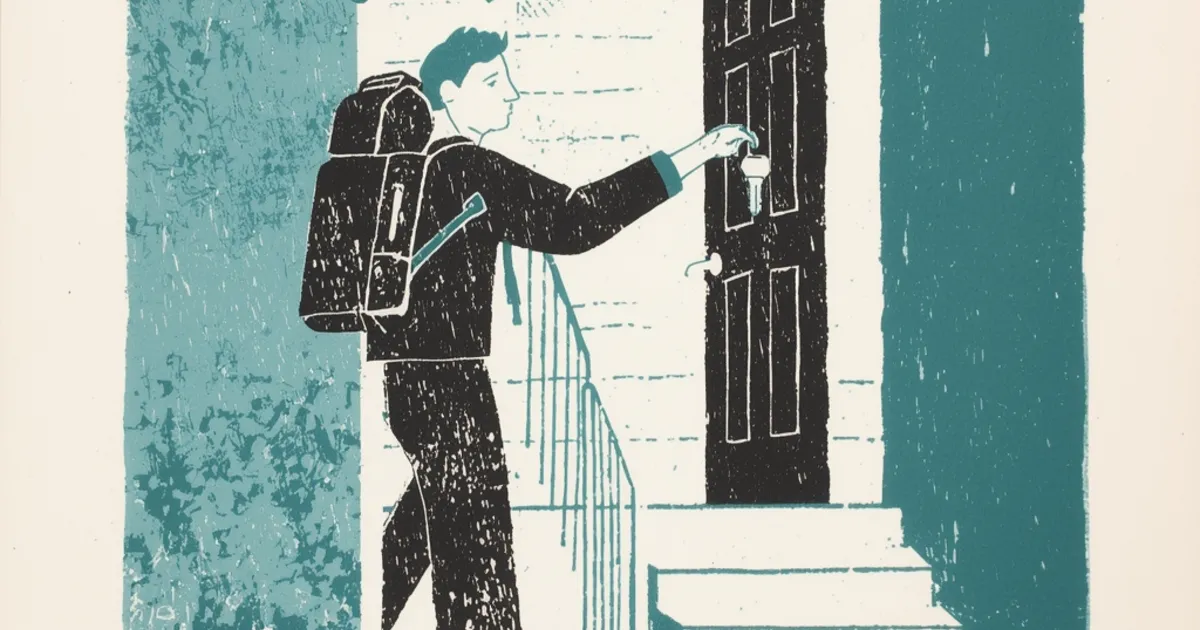
Housing First turns that around. The person gets a permanent home, with an ordinary lease,
straight away. Support for health, drugs, money and work is offered and stays available, but
keeping the home does not depend on taking it.
The idea is simple: it is hard to get well, or keep a job, with nowhere safe to sleep.
New York, 1992: the first test
Pathways to Housing in New York took people with serious mental illness straight off the
street into their own scattered apartments, with a support team. Over five years, 88% of its
tenants stayed housed. In the city's residential treatment system, which required people to
show they were ready, 47% did.
Canada: the biggest trial
The At Home/Chez Soi project enrolled more than 2,000 homeless people with mental illness
in five cities: Vancouver, Winnipeg, Toronto, Montréal and Moncton. It randomly assigned them
to Housing First or to the services already available, then followed them for two years.
Random assignment is what makes the result trustworthy: the two groups started out alike.
| Outcome | Housing First | Usual services |
|---|
| Share of time stably housed over two years | 73% | 32% |
The cost findings matter as much. For high-need participants, every $10 spent on Housing
First saved an average of $9.60 in other services: hospitals, shelters, police and courts.
For the top 10% of service users, every $10 spent saved more than $21.
So for the people costing the system most, housing them was cheaper than leaving them
homeless.
Finland: a whole country
Finland is the country that made Housing First national policy. From 2008 its programme
to reduce long-term homelessness converted shelters into permanent flats with their own
leases, built new homes, and attached support.
By the end of the programme in 2015, long-term homelessness had fallen 35%. Finland's
housing agency counted 1,010 long-term homeless people in 2024.
Finland also shows the limits. In 2024 the number of homeless people living alone rose for
the first time since 2012, by 377 to 3,806. Housing First needs a steady supply of affordable
homes. When supply tightens, the numbers move.
What it doesn't do
A 2020 systematic review in The Lancet Public Health pulled together the trials of
permanent supportive housing in rich countries. It confirmed large gains in housing
stability. It did not find that Housing First produced better mental health, physical health
or substance use outcomes than the treatment available in the community.
That is worth saying plainly, because both sides misuse it.
- Housing First is not a cure. People bring their illnesses and addictions into the new
home.
- It is also no worse than the staircase on those measures, and much better at the one
thing it sets out to do: ending homelessness for the person in front of you.
The staircase asked people to get well first and be housed later. The trials show people
do no better on health when made to wait, and far worse on housing.
Why it is still not the norm
The costs fall in one budget and the savings in others. A housing department pays the rent;
the savings turn up in hospital, police and prison budgets. Unless someone counts across all
of them, Housing First looks like a new expense rather than a cheaper way to spend money
already being spent.
It also runs against an old instinct: that help should be earned. The evidence says the
condition costs more than it saves.
What to check where you live
- Does your state or city fund Housing First, and is it permanent housing with a lease, or a
temporary bed under that name?
- Is keeping the home separate from taking treatment? If not, it is the staircase with a new
label.
- Where will the homes come from? Finland built and bought them. Without supply, the model
stalls.
- Does anyone count the savings across health, police and justice budgets, not just the
housing budget?
Sources
- Tsemberis, S., & Eisenberg, R. F. (2000). Pathways to housing: Supported housing for
street-dwelling homeless individuals with psychiatric disabilities. Psychiatric Services,
51(4), 487–493.
doi.org/10.1176/appi.ps.51.4.487
- Goering, P., Veldhuizen, S., Watson, A., Adair, C., Kopp, B., Latimer, E., Nelson, G.,
MacNaughton, E., Streiner, D., & Aubry, T. (2014). National At Home/Chez Soi final
report. Mental Health Commission of Canada.
mentalhealthcommission.ca
- Aubry, T., Bloch, G., Brcic, V., Saad, A., Magwood, O., Abdalla, T., Alkhateeb, Q., Xie,
E., Mathew, C., Hannigan, T., Costello, C., Thavorn, K., Stergiopoulos, V., Tugwell, P., &
Pottie, K. (2020). Effectiveness of permanent supportive housing and income assistance
interventions for homeless individuals in high-income countries: A systematic review.
The Lancet Public Health, 5(6), e342–e360.
thelancet.com
- Housing Finance and Development Centre of Finland (ARA/Varke). (2025). Homeless people
2024. varke.fi
- Centre for Public Impact. (2019, January 3). Eradicating homelessness in Finland: The Housing First
programme.
centreforpublicimpact.org