On 19 December 2019 a falling tree hit a fire truck at Buxton, south-west of Sydney, and killed two volunteers from the Horsley Park brigade. Two days later the brigade sent three crews back to the fires, their trucks marked with the dead men's names. Nobody paid any of them to go.
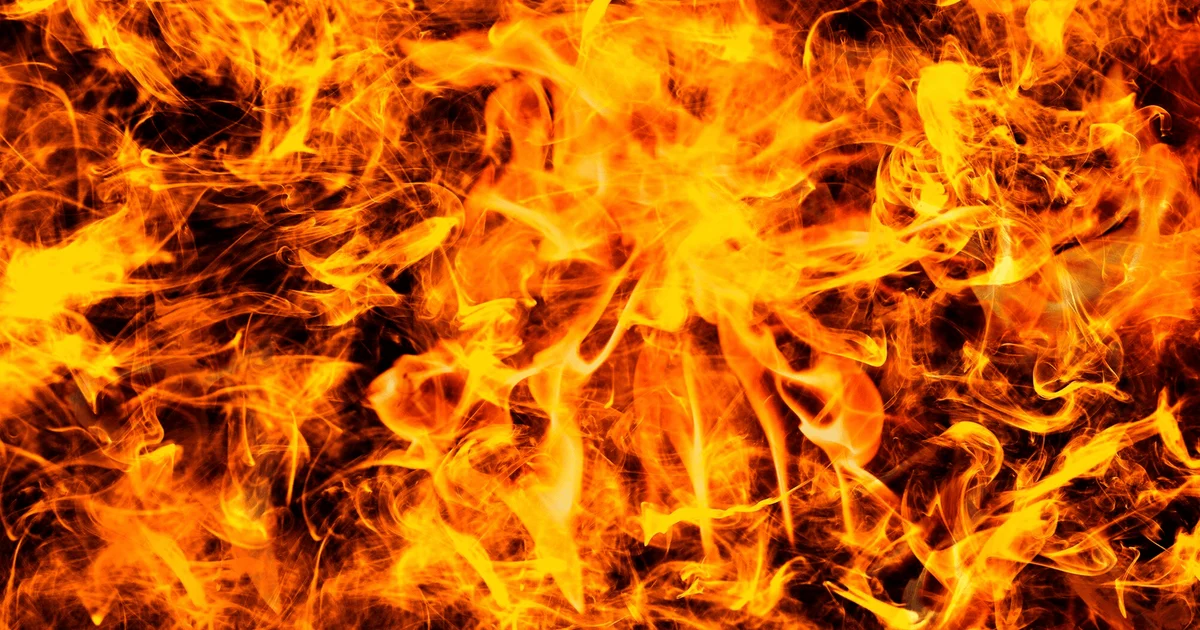
Look at it for a moment. Now picture walking towards it, for nothing.
Two young dads from Horsley Park
Deputy Captain Geoffrey Keaton was 32. Firefighter Andrew O'Dwyer was 36. Both were young fathers, in a 68-member brigade on the rural edge of western Sydney. The tree rolled their truck (NSW Rural Fire Service, 2020; SBS News, 2019).
That Saturday, three Horsley Park crews joined a strike team, trucks marked "In memory of Geoff Keaton" and "In memory of Andrew O'Dwyer". The brigade's message that morning: "In true Horsley Park spirit, our crew are heading out today… To all crews in the field today, stay safe and look after each other" (SBS News, 2019). Eleven days later a third NSW volunteer, Sam McPaul, died when a tanker rolled near Albury (NSW Rural Fire Service, 2020).
That was Black Summer. Fires burned more than 24 million hectares, killed 33 people and destroyed more than 3,000 homes (Binskin et al., 2020). Smoke was linked to 417 more deaths (Borchers Arriagada et al., 2020). Most of the people standing between those fires and the towns did it for nothing. Why would anyone?
It began with neighbours
Before there was a service, there was you and your own paddock. Landowners defended their own properties, because nobody else was coming. The first brigade on record in New South Wales, at Berrigan, was set down at a meeting in the Royal Hotel in November 1900 (NSW Rural Fire Service, n.d.-b). Some neighbours sat down in a pub and agreed to turn up for each other.
Victoria's version came out of catastrophe. The Black Friday fires of January 1939 killed 71 people and burned more than 2 million hectares, and on 2 April 1945 the Country Fire Authority was born (Country Fire Authority, n.d.).
Those meetings grew. The NSW Rural Fire Service now has about 72,000 volunteers and almost 2,000 brigades covering more than 95% of the state, and says it is "widely acknowledged as the largest volunteer fire service in the world" (NSW Rural Fire Service, n.d.-a). It's still the meeting in the pub. There are just more pubs.
Why show up for free
Jim McLennan and Adrian Birch surveyed 988 Australian volunteer firefighters about why they joined. Nobody had one reason. People named skills and friendship, protecting their own property and district, and helping neighbours, all at once. Younger volunteers leaned more on what they personally gained, but cared as much about safety and community as anyone (McLennan & Birch, 2009).
That should comfort us. We tend to imagine that goodness means pure sacrifice, and that anyone who gets something out of it is a fraud. These people get friends, skills and a place in town, and they go out anyway, on the worst day of the year. Nobody needs to be a saint. They need a shed, a truck and some mates, and a reason to be there on an ordinary Tuesday, so they're there when it isn't one.
The word they kept
In 1999 Prime Minister John Howard tried to write "mateship" into a new preamble to the Constitution. Critics called the word blokey, and it was dropped before the vote. Howard defended it on Melbourne radio: "I see mateship as not a blokey term but I see it as something that sums up the idea of looking after each other" (Howard, 1999).
The word never made the Constitution. Twenty years later a brigade that had just lost two members told every crew in the field to look after each other. Many brigades take cadets from age 12, so a country kid can grow up in the station their parents already volunteer at (NSW Rural Fire Service, n.d.-c). That's where the word went.
What "free" costs
Volunteering for weeks of a fire season can mean weeks without pay. On 29 December 2019 the federal government offered some NSW volunteers up to $300 a day, capped at $6,000: the self-employed and those at small and medium businesses, once they'd been called out for more than 10 days. Announcing it, the Prime Minister said: "I know RFS volunteers don't seek payment for their service." Mick Holton, president of the Volunteer Fire Fighters Association, noted some members had spent their own money on fuel and protective gear (Macmillan, 2019).
Both things are true. They don't ask. And people who don't ask are the easiest people in the country to overlook. We built a large part of our disaster plan on people who'll never send a bill.
Fewer hands
Formal volunteering of any kind fell from 30% of Australians in 2019 to 25% in 2020 and 23% in 2025 (Australian Bureau of Statistics, 2025). McLennan and Birch warned of "a potential crisis in wildfire emergency response capability" back in 2005. Their later study found volunteer numbers had "declined significantly over the past decade", and that memberships were ageing (McLennan & Birch, 2005, 2009).
Look at what they blamed. Not selfishness. Work: casual jobs, self-employment, demands for more productivity. Those changes make it harder to volunteer, they wrote, "regardless of their motivation to do so". And fewer Australians are in the 25-to-45 years that once filled the sheds. Nobody got worse. You can't train at the shed on a Tuesday if Tuesday already belongs to somebody else.
So here's what to ask, and it reaches past fire. Life throws terrible days at us, and the thing that has always got people through is someone nearby who knows what to do and has the time to come. We know how to make more of those people. Give them the hours. A country that wants neighbours with a truck has to leave its people enough of a life to be one. It's the same logic as the neighbours who train to reach an emergency first: see What if your neighbours could reach an emergency before the ambulance?
What you can do
- Join, if you can. The RFS trains every member free of charge (NSW Rural Fire Service, n.d.-c). Plenty of the jobs in a brigade aren't on the fire line.
- Ask your employer about leave. If your workplace lets volunteers go when the pager sounds, say so publicly. If it doesn't, ask why.
- Send a kid. A cadet program only works if a town keeps sending its children to it.
- Answer the door. When your local brigade comes around, be glad to see them.
Two days after losing two mates, Horsley Park was back on the fireground. A country fire brigade isn't a service sent from somewhere else. It's the neighbours, trained, with a truck.
Thank one. Better still, join one.
Sources
- Australian Bureau of Statistics. (2025). General social survey: Summary results,
Australia. https://www.abs.gov.au/statistics/people/people-and-communities/general-social-survey-summary-results-australia/latest-release
- Binskin, M., Bennett, A., & Macintosh, A. (2020). Royal Commission into National Natural Disaster Arrangements: Report. Commonwealth of Australia. royalcommission.gov.au/natural-disasters/report
- Borchers Arriagada, N., Palmer, A. J., Bowman, D. M. J. S., Morgan, G. G., Jalaludin, B. B., & Johnston, F. H. (2020). Unprecedented smoke-related health burden associated with the 2019–20 bushfires in eastern Australia. Medical Journal of Australia, 213(6), 282–283. doi.org/10.5694/mja2.50545
- Country Fire Authority. (n.d.). Black Friday 1939. cfa.vic.gov.au
- Howard, J. (1999, March). Interview with Steve Price, Radio 3AW [Transcript]. PM Transcripts. pmtranscripts.pmc.gov.au/node/21821
- Macmillan, J. (2019, December 29). Scott Morrison announces compensation payments for volunteer firefighters. ABC News. https://www.abc.net.au/news/2019-12-29/scott-morrison-announces-volunteer-firefighter-compensation/11830758
- McLennan, J., & Birch, A. (2005). A potential crisis in wildfire emergency response
capability? Australia's volunteer firefighters. Environmental Hazards, 6(2), 101–107.
doi.org/10.1016/j.hazards.2005.10.003
- McLennan, J., & Birch, A. (2009). Age and motivations to become an Australian volunteer
firefighter. International Journal of Mass Emergencies & Disasters, 27(1), 53–65.
doi.org/10.1177/028072700902700103
- NSW Rural Fire Service. (n.d.-a). About us. https://www.rfs.nsw.gov.au/about-us
- NSW Rural Fire Service. (n.d.-b). History of the service. https://www.rfs.nsw.gov.au/about-us/history
- NSW Rural Fire Service. (n.d.-c). Volunteer. https://www.rfs.nsw.gov.au/volunteer
- NSW Rural Fire Service. (2020, December 19). Remembering lives lost. https://www.rfs.nsw.gov.au/news-and-media/general-news/remembering-lives-lost
- SBS News. (2019, December 21). In memory of Geoff and Andrew: Grief-stricken firefighters back on frontline. https://www.sbs.com.au/news/article/in-memory-of-geoff-and-andrew-grief-stricken-firefighters-back-on-frontline/xicxw7x0n