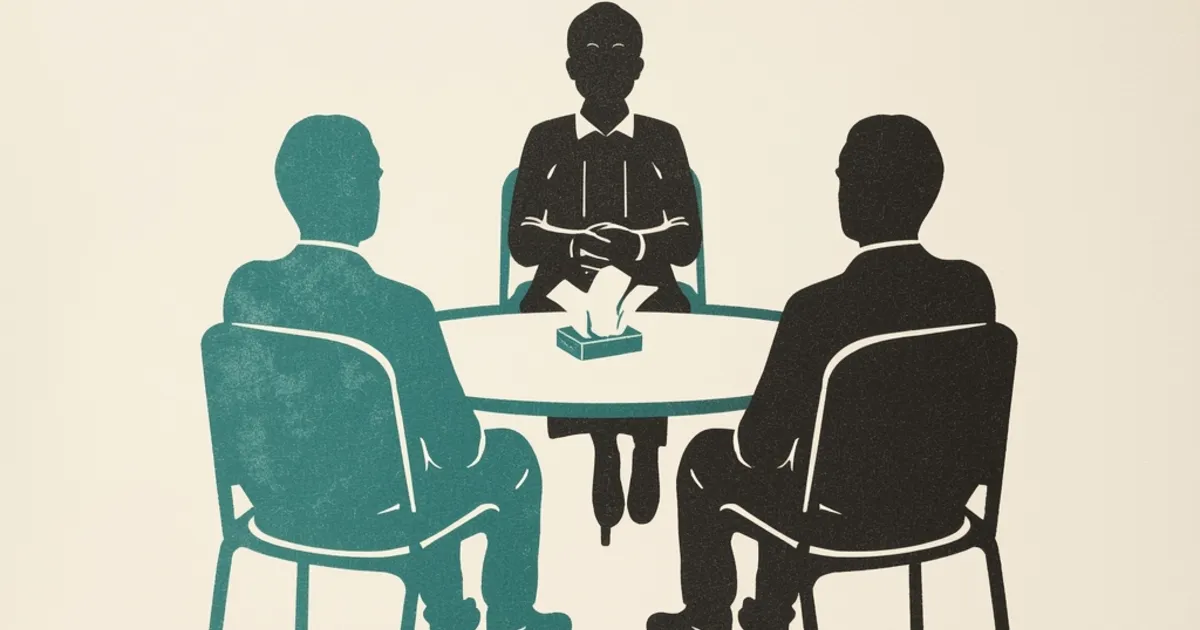
On one side of the desk: brain imaging showing that young adults who were hit often as children carry measurable differences in the dopamine system (Sheu et al., 2010), and that children who are spanked show a heightened neural response to threat that resembles the response in children who were seriously abused (Cuartas et al., 2021). On the other: a licensed psychotherapist, a sex educator and a large online literature arguing that being hit on the backside, by arrangement, as an adult, is one of the more effective things they have found for anxiety, shame and the residue of trauma. Both are talking about the same act. So which is it: the thing that breaks you, or the thing that fixes you? The question is badly formed. Control, warning, trust, meaning and repair decide the outcome, not the act.
If this touches something in you now: Lifeline 13 11 14. Kids Helpline 1800 55 1800 (any age up to 25). Blue Knot 1300 657 380, for adults who carry childhood trauma. In an emergency, 000.
Two scientists take back their own famous idea
In 2016, Steven Maier and Martin Seligman revisited their own work on "learned helplessness". The old account held that animals given inescapable shock learn to be helpless.
Half a century of brain research later, they concluded the opposite (Maier & Seligman, 2016). Nothing is learned. Passivity is the default response to prolonged aversive stimulation. What the brain actively learns is control. The ventromedial prefrontal cortex, gating the dorsal raphe, detects it. Detecting control blunts the current stressor and protects against later stressors that cannot be controlled. Same shock, same intensity, same duration; opposite long-term outcome, decided by whether the animal could switch it off.
A child cannot switch it off, negotiate it, leave, appeal or predict it. An adult with a word that stops everything can, and knows they can. The controllability finding is not a framing. It is the mechanism.
Same act, six differences
A child hit by a parent has no control, no warning they can rely on, and no way out. The person hurting them is the person they depend on. The meaning arrives as "you are bad", or worse, "this is love", and usually nobody comes afterwards to put things right.
An adult who agrees to be struck, as some people do, holds a word that stops everything. They set the terms in advance. They chose the other person and can leave. The circuitry is already built. The meaning is explicit and shared, framed as play. And care afterwards, which the community calls aftercare, is the rule.
| Hit as a child | Adult, by agreement |
|---|
| Control | None | Can stop it any moment |
| Warning | Depends on an adult's mood | Agreed in advance |
| Relationship | The person you depend on | Chosen, and you can leave |
| Timing | While the brain is still building | After it is built |
| Meaning | "You are bad." Or worse: "This is love." | Said out loud, shared |
| Repair afterwards | Usually none | Structurally mandatory |
The act is the same in both columns. Everything that decides the outcome sits somewhere else. So "is it a cause or a cure?" is the wrong question.
Six in ten of us
This isn't about a small group. The Australian Child Maltreatment Study interviewed a random national sample of 8,503 Australians aged 16 and over. Of them, 62.5% (95% CI 61.2 to 63.9) were smacked or physically punished four or more times as children, mostly by parents (Haslam et al., 2023). That is six in ten of the adults around you. The same study found 26.4% of Australians still believe physical punishment is necessary to raise a child.
We went through the study's published tables, age band by age band. Among people aged 16 to 24 the figure is still 58.4%, well above half (z = 9.1). That sits 9.7 points below the peak band, people now aged 45 to 54. It is fading, slowly: each decade-younger birth cohort is 3.7 points lower.
It also passes down. Parents who were hit as children hit their own children more often: 60.4% against about 41.2% of parents who were not (odds ratio about 2.17). Compared within age bands the odds ratio is 2.51 (95% CI 2.16 to 2.93), and every band with enough parents agrees. The people it happened to are the most likely to do it.
Belief is moving faster than behaviour. Among parents aged 65 and over, 39.3% say physical punishment is necessary to raise a child. Among the youngest parents it is 19.0%.
Does it harm? A review of studies covering 160,927 children pooled 111 effect sizes: 13 of 17 mean effects were significant, every one in the direction of harm, and effect sizes did not differ by study design or from those for physical abuse (Gershoff & Grogan-Kaylor, 2016). A US study of 8,316 adults found spanking still predicted suicide attempts (adjusted odds ratio 1.37), moderate to heavy drinking and street drug use over and above the abuse (Afifi et al., 2017). The harm no longer reads as a marker of a troubled household. Seventy states have prohibited all corporal punishment of children; Australia is not among them, and physical punishment remains lawful in every state and territory (Havighurst et al., 2023). The live question is the gap between what is known and what is legislated.
Rich parents stopped first
Take one Perth parent, living in an affluent suburb. None of the parents at their son’s school spanked. One family, who had only moved to Australia recently, had spanked their son once. It was a stark contrast to the parents in this parent’s previous locale, close to the outskirts of Perth in a low-socioeconomic area. About half the parents there would spank their children. Those who did not cited their kids’ behaviour as the reason. This parent suspects those families were moving up a few rungs on the economic ladder, and misattributed their children’s good behaviour.
The numbers agree. Four US national surveys from 1988 to 2011 tell the same story: at every point, mothers at the bottom of the income ladder endorsed spanking more than mothers at the top, and the gap never closed (Ryan et al., 2016).
The sociologist Melvin Kohn spent thirty years at the US National Institute of Mental Health asking why, and his answer was work. Parents raise children for the jobs they know. Working-class parents, he wrote, value “conformity to external proscription”; middle-class parents value “self-direction” (Kohn, 1963). Parents whose own work means doing as they are told prize obedience, and punish its absence. Parents whose work rewards judgement reason with their children instead (Kohn, 1969).
Annette Lareau grew up the daughter of two teachers who reached college on the GI Bill, raised on her mother’s stories of a childhood of evictions, spent in libraries partly because home was too cold. She followed families through homes, ball games and school and found the same split: middle-class children are taught to question adults, negotiate and speak up; working-class and poor children are taught to defer (Lareau, 2011).
Closer to home, Geoffrey Watson at the University of Western Australia studied the same divide on the Little League diamond, comparing what the game meant to middle-class and working-class families (Watson, 1973).
Hitting is not wisdom handed down. It is training for a life of taking orders. The families with the most choices dropped it first. Every family can.
Why do children act out? Why do children do what might be considered incorrect? Children only want to please you and get your attention and approval. It is not a popular argument, but it is truthful if we are honest with ourselves.
Attachment research has a name for what children reach for: secure attachment. It is the golden elixir of childhood. A child who trusts that the adult will come, comfort and stay uses that adult as a safe haven when frightened and a secure base to explore from. Children with insecure attachment show more aggression and acting out, and most of all children with disorganised attachment, the kind that grows when the person a child runs to is also the person they fear (Fearon et al., 2010). Hitting turns the safe haven into the threat.
The Circle of Security, built by Glen Cooper, Kent Hoffman and Bert Powell, teaches parents to be that haven. Its rule fits in one breath: always be bigger, stronger, wiser and kind; whenever possible, follow your child’s need; whenever necessary, take charge. Taking charge never needs a hand. Start at circleofsecurityinternational.com.
Paedophiles can convince children to do things with them and not tell anyone. If you are spanking your kids, know in your heart that you are — in one respect — worse than a paedophile at child management.
That parent was hit as a child too. “I would have done anything my parents wanted, and when I did not it was due to a lack of understanding or power. Hitting me caused me to live my entire childhood, and it continues to this day, in fear. Why give that to somebody? It ain’t worth it.”
The repair is in the mismatch
Here is how the same act can heal. An emotional memory only updates when something happens that contradicts it (Lane et al., 2015). The old memory says: pain comes without warning, I can't stop it, it means I'm bad, and nobody comes. An experience changes that memory only if it delivers the opposite. I set the terms. It stopped when I said stop. It meant nothing about my worth. Someone stayed.
Repeat the original and you strengthen it. Contradict it and it can change. The match doesn't heal. The mismatch does.
The adults still carrying it
"Should we do this to children" is answered. The open question is the other one: what do we offer the adults still carrying it? There is no public health messaging aimed at them, no screening question, and most have no name for what they carry, because what happened to them was legal, normal and endorsed by most of the people they know. Those who reach for impact play, a dojo, cold water or a substance are not exotic. They are the majority population improvising with no map.
Wrong explanations, wrong instructions
Both sides of this argument carry folk science. Ask why pain can feel good and most people say "endorphins". But when researchers gave runners a drug that blocks the body's opioids, the runner's high still came (Siebers et al., 2021). The calm is real. The named chemical was wrong. Central opioid activity during a scene has not been measured.
That would be trivia, except a wrong theory gives wrong instructions. A widely shared online guide claims the nerve to the genitals runs through the buttocks, and tells readers to aim towards the middle. That nerve doesn't serve the buttocks. Following the guide sends force towards the base of the spine, the one area every safety rule in that community forbids. The same guide treats the moment someone can no longer say their stop word as a goal. That moment is where consent ends.
The practice can work while every word of its explanation is fiction. Willow bark treated pain and fever for centuries under the wrong theories; the mechanism came much later (Desborough & Keeling, 2017). The Royal Navy suppressed scurvy with citrus in the 1790s with no idea vitamin C existed. Decades later two supply changes brought it back, and with no model of the active ingredient nobody could work out which had broken it (Carpenter, 1986). A wrong theory is survivable right up until you need to change something.
An anti-smacking poster makes the same anatomical mistake from the other side. Anyone who knows basic anatomy can knock it over, and the audience then throws out the real evidence with it. The case against hitting children doesn't need a nerve diagram. It needs the 160,927 children.
What any substitute needs
Some people use self-harm because it brings fast relief from unbearable feelings; that relief is its most consistent documented function (Klonsky, 2007). It is why "just stop" fails. People rarely give a coping habit up; they swap it for something that does the same job at lower cost. Someone who trains in a martial art three nights a week gets impact dosed by someone else, an instructor who will stop it, a frame that says I am becoming strong, and a ritual at the end where everyone bows out and talks: a near-perfect substitute, assembled by accident by an institution built for something else.
Whatever the swap, the paper names five things that separate a substitute from the same harm in new clothes. A witness: another person present, calibrating and staying afterwards, "the one thing self-harm structurally cannot have". Direction of intent: towards building tolerance, staying present and connecting, not escape, numbing or punishment. Which way shame runs: disclosure, acceptance, less shame, not shame, secrecy and more need. An external ceiling: someone else watching shoulders, hands and breath, "a brake that does not depend on you". What the tissue is for: areas chosen to take force and recover. "Remove those five and it is not the other thing." The paper gives a monthly check: escalating, cannot skip it, shame the next day, a stop word that is not available in the moment. Escalation plus cannot-skip is the dependency signature. No trial shows that agreed impact helps anxiety, trauma or self-harm. In the paper's words: "It is therapeutic; it is not therapy. It can deliver a corrective experience to a nervous system. It cannot do the meaning-making."
The principle
The principle: you cannot subtract a coping mechanism. You can only add something that does the same job at lower cost. The honest question is never should I stop. It is: what is this doing for me, what else could do it, and does the replacement have a witness, a ceiling and someone who stays afterwards?
The kink community's best idea has nothing to do with sex: after putting someone through something physiologically enormous, you do not let them drive home. Surgery, a funeral, a birth, a redundancy, a court date: we put people through each with no structured re-regulation. Presence, warmth, fuel, weight, nothing to perform, and a check-in the next day. Twenty minutes and a message.
It travels
Parents who were hit as children hit their own children more often: 60.4% against about 41.2% of parents who were not (odds ratio about 2.17, 95% CI 1.88 to 2.51).
The act was never the variable. A child hit by the person they depend on has no control, no warning, no exit, no meaning but you are bad, and no one afterwards. An adult who sets the terms, holds the stop and is held afterwards has all of it. The same mechanism that makes the second settling (detected control, and a mismatch that lets an old expectation update) explains why the first injures. Six in ten Australians were hit as children; the youngest adults are barely below that; parents who were hit hit their own children at about twice the odds. The evidence on children is settled, and the law has not caught up. The adults carrying it are most of us, improvising with folk physiology that tells them to aim at the wrong place and to treat losing their voice as a prize. Get the mechanism right and the safe thing and the effective thing turn out to be the same thing.
The full paper, with data and code: Cause or Cure (Astor, 2026).
Sources
- Afifi, T. O., Ford, D., Gershoff, E. T., Merrick, M., Grogan-Kaylor, A., Ports, K. A., MacMillan, H. L., Holden, G. W., Taylor, C. A., Lee, S. J., & Peters Bennett, R. (2017). Spanking and adult mental health impairment: The case for the designation of spanking as an adverse childhood experience. Child Abuse & Neglect, 71, 24–31. https://doi.org/10.1016/j.chiabu.2017.01.014
- Astor, C. T. (2026). Cause or cure: Why the same act harms a child and can settle an adult, and why wrong mechanisms cost both sides [Preprint]. Omxus Press. https://github.com/vexanonus/trauma-cause-or-cure
- Carpenter, K. J. (1986). The history of scurvy and vitamin C. Cambridge University Press.
- Cuartas, J., Weissman, D. G., Sheridan, M. A., Lengua, L., & McLaughlin, K. A. (2021). Corporal punishment and elevated neural response to threat in children. Child Development, 92(3), 821–832. https://doi.org/10.1111/cdev.13565
- Desborough, M. J. R., & Keeling, D. M. (2017). The aspirin story – from willow to wonder drug. British Journal of Haematology, 177(5), 674–683. https://doi.org/10.1111/bjh.14520
- Fearon, R. P., Bakermans-Kranenburg, M. J., van IJzendoorn, M. H., Lapsley, A.-M., & Roisman, G. I. (2010). The significance of insecure attachment and disorganization in the development of children’s externalizing behavior: A meta-analytic study. Child Development, 81(2), 435–456. https://doi.org/10.1111/j.1467-8624.2009.01405.x
- Gershoff, E. T., & Grogan-Kaylor, A. (2016). Spanking and child outcomes: Old controversies and new meta-analyses. Journal of Family Psychology, 30(4), 453–469. https://doi.org/10.1037/fam0000191
- Haslam, D. M., Malacova, E., Higgins, D., Meinck, F., Mathews, B., Thomas, H. J., Finkelhor, D., Havighurst, S. S., Pacella, R., Erskine, H. E., Scott, J. G., & Lawrence, D. (2023). The prevalence of corporal punishment in Australia: Findings from a nationally representative survey. Australian Journal of Social Issues, 59(3), 580–604. https://doi.org/10.1002/ajs4.301
- Havighurst, S. S., Mathews, B., Doyle, F. L., Haslam, D. M., Andriessen, K., Cubillo, C., Dawe, S., Hawes, D. J., Leung, C., Mazzucchelli, T. G., Morawska, A., Whittle, S., Chainey, C., & Higgins, D. J. (2023). Corporal punishment of children in Australia: The evidence-based case for legislative reform. Australian and New Zealand Journal of Public Health, 47(3), 100044. https://doi.org/10.1016/j.anzjph.2023.100044
- Klonsky, E. D. (2007). The functions of deliberate self-injury: A review of the evidence. Clinical Psychology Review, 27(2), 226–239. https://doi.org/10.1016/j.cpr.2006.08.002
- Kohn, M. L. (1963). Social class and parent-child relationships: An interpretation. American Journal of Sociology, 68(4), 471–480. https://doi.org/10.1086/223403
- Kohn, M. L. (1969). Class and conformity: A study in values. Dorsey Press.
- Lane, R. D., Ryan, L., Nadel, L., & Greenberg, L. (2015). Memory reconsolidation, emotional arousal, and the process of change in psychotherapy: New insights from brain science. Behavioral and Brain Sciences, 38, e1. https://doi.org/10.1017/S0140525X14000041
- Lareau, A. (2011). Unequal childhoods: Class, race, and family life (2nd ed.). University of California Press.
- Maier, S. F., & Seligman, M. E. P. (2016). Learned helplessness at fifty: Insights from neuroscience. Psychological Review, 123(4), 349–367. https://doi.org/10.1037/rev0000033
- Ryan, R. M., Kalil, A., Ziol-Guest, K. M., & Padilla, C. (2016). Socioeconomic gaps in parents’ discipline strategies from 1988 to 2011. Pediatrics, 138(6), e20160720. https://doi.org/10.1542/peds.2016-0720
- Sheu, Y.-S., Polcari, A., Anderson, C. M., & Teicher, M. H. (2010). Harsh corporal punishment is associated with increased T2 relaxation time in dopamine-rich regions. NeuroImage, 53(2), 412–419. https://doi.org/10.1016/j.neuroimage.2010.06.043
- Siebers, M., Biedermann, S. V., Bindila, L., Lutz, B., & Fuss, J. (2021). Exercise-induced euphoria and anxiolysis do not depend on endogenous opioids in humans. Psychoneuroendocrinology, 126, 105173. https://doi.org/10.1016/j.psyneuen.2021.105173
- Watson, G. G. (1973). Game interaction in Little League baseball and family organization [Doctoral dissertation, University of Illinois at Urbana-Champaign].