
What happens when the person harmed meets the person who did it?
New Zealand sends young offenders to a family meeting, not a courtroom. Ten trials show victims fare better and offenders reoffend less.
7 min read
 articleworld4u
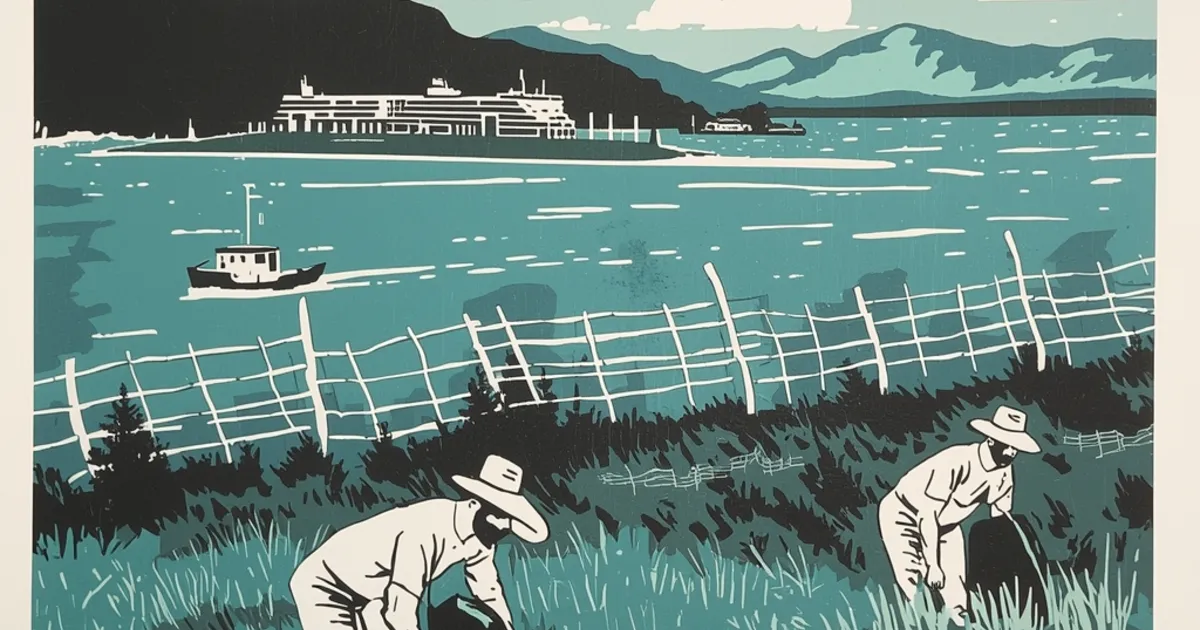
Photo: Professor Caretaker, CC BY-SA 4.0, via Wikimedia Commons
In Finland, about a third of prison places are in open prisons: no wall, no fence, people in their own clothes, working for a wage and sometimes studying off site. Finland once locked up more of its people than Australia does today. It now locks up about a third as many, and its crime rates followed the same path as its neighbours'. The question is why a country would choose this, and why others don't.
Suomenlinna is a sea fortress on a group of islands off Helsinki, built from 1748 and listed as a UNESCO World Heritage Site in 1991. In 1918, after Finland's civil war, it held a prison camp for captured Red Guard fighters (Wikipedia, 2026a).
Since 1971 it has held a different kind of prison. About 100 men live at the southern tip of one island and spend their weekdays repairing the fortress: its buildings, its stone walls and its landscape. The fortress's governing body assigns the work sites (Prison and Probation Service of Finland, n.d.-a; Wikipedia, 2026b). The men who once would have been locked behind walls now keep a world heritage site standing for the tourists and picnickers who visit it.
Finnish law has two kinds of prison, closed and open. In an open prison, people "may spend time and move within the area of the prison or its ward, in the workplace, or in another place of activity without immediate supervision". They wear their own clothes (Imprisonment Act 767/2005, ch. 4 s. 1; ch. 9 s. 2). Maintenance work pays €4.70 to €5.00 an hour into the person's own bank account, and some people get permission to work for an ordinary employer outside (Prison and Probation Service of Finland, n.d.-b). The criminologist Tapio Lappi-Seppälä puts it plainly: open institutions "are in practice prisons without walls" (2009, p. 344).
In 2025, about 67% of Finland's prisoner places were in closed prisons and 33% in open prisons or open wards (Prison and Probation Service of Finland, 2026).
Norway runs the same idea on Bastøy, an island 75 km south of Oslo reached only by ferry. It is the country's largest low-security prison, with places for 125 men (Kriminalomsorgen, n.d.). The men live in wooden cottages and work the prison farm. Of 69 staff, five stay on the island overnight (Wikipedia, 2026c).
The island has held people before. From 1900 it was a reformatory for boys, run under strict discipline. In 1915 the boys rebelled, and the government sent more than 100 troops, two seaplanes and two submarines to end it (Wikipedia, 2026c). The same ground that once took a small army to control now runs on trust and a ferry timetable.
Norway calls this the principle of normality: life inside should resemble life outside as closely as safety allows. People in prison keep their right to vote, and they get health care, schooling and library services from the same public agencies as everyone else (Wikipedia, 2026d).
Finland did not always look like this. After civil war, prohibition, depression and two wars with Russia, it locked up three to four times as many people as its Nordic neighbours, who kept their rates between 40 and 80 per 100,000 (Lappi-Seppälä, 2009).
| Year | Finland, prisoners per 100,000 |
|---|---|
| 1950 | 187 |
| 1970 | 111 |
| 1990 | 69 |
| 2000 | 55 |
| 2025 | 58 |
(World Prison Brief, 2025a)
For comparison, Australia's rate in June 2025 was 170 (World Prison Brief, 2025b).
The fall came from law, passed step by step from the mid-1960s to the mid-1990s: shorter minimum terms before parole, lighter penalties for theft and property crime, fines and suspended sentences instead of prison for drink driving, less weight on past convictions, and limits on imprisoning young people (Lappi-Seppälä, 2009, p. 352).
Crime did not explode. Lappi-Seppälä compared Finland with Sweden, Denmark and Norway from 1950 to 2000 and found "a striking difference in the use of imprisonment, and a striking similarity in the trends in recorded criminality" (2009, p. 362). Finland let far more people go home, and its crime tracked its neighbours' anyway.
Part of the story is a person. Inkeri Anttila became Finland's first woman to earn a doctorate in law, in 1946, and its first woman professor of criminal law, in 1961. In the 1950s she ran a training centre for prison staff. From 1963 she was the first director of the Institute of Criminology in the Ministry of Justice. In 1975 she served six months as Minister of Justice and pushed reforms to suspended sentences, drink driving and parole. She worked just as hard for victims: better protection and better services for the people harmed (Wikipedia, 2026e).
Anttila was one of a small group of experts who shared, in the words of criminologist Patrik Törnudd, "an almost unanimous conviction that Finland's comparatively high prisoner rate was a disgrace" and could be cut "without serious repercussions on the crime situation" (quoted in Lappi-Seppälä, 2009, p. 362).
Criminologists call this Nordic "penal exceptionalism": low imprisonment and humane prisons. John Pratt traces it to "cultures of equality" built into daily life through a welfare state that serves everyone (Pratt, 2008). Lappi-Seppälä adds details that show what Finns value:
(Lappi-Seppälä, 2009, pp. 350, 363–365)
Open prisons are not for everyone, and saying so keeps the idea honest.
What the evidence does show is that prison built around rehabilitation can reduce crime. Using cases randomly assigned to stricter and more lenient judges in Norway, economists found that going to prison cut the chance of reoffending over five years by 29 percentage points. The drop came from people who had not been working before: inside, they joined employment programmes, and afterwards they worked and earned more (Bhuller et al., 2020). Prison that looks like life outside prepares people for life outside.
For what closed, harsh prison does to people after release, see It wasn't that bad? What prison does to people after release.
New Zealand sends young offenders to a family meeting, not a courtroom. Ten trials show victims fare better and offenders reoffend less.
In 2001 Portugal stopped arresting people for using any drug and sent them to a health panel instead. HIV and overdose deaths fell. Here's what worked, and what's strained.
Photo: Alvesgaspar, CC BY-SA 3.0, via Wikimedia Commons
$5.45 billion a year: nearly two-thirds to law enforcement, under 2% to keeping people alive. Who gets arrested, and what Portugal and the ACT did instead.
Photo: Mike Knell from Zürich, Switzerland, CC BY-SA 2.0, via Wikimedia Commons

