Iceland stopped telling teenagers to say no and gave them something better
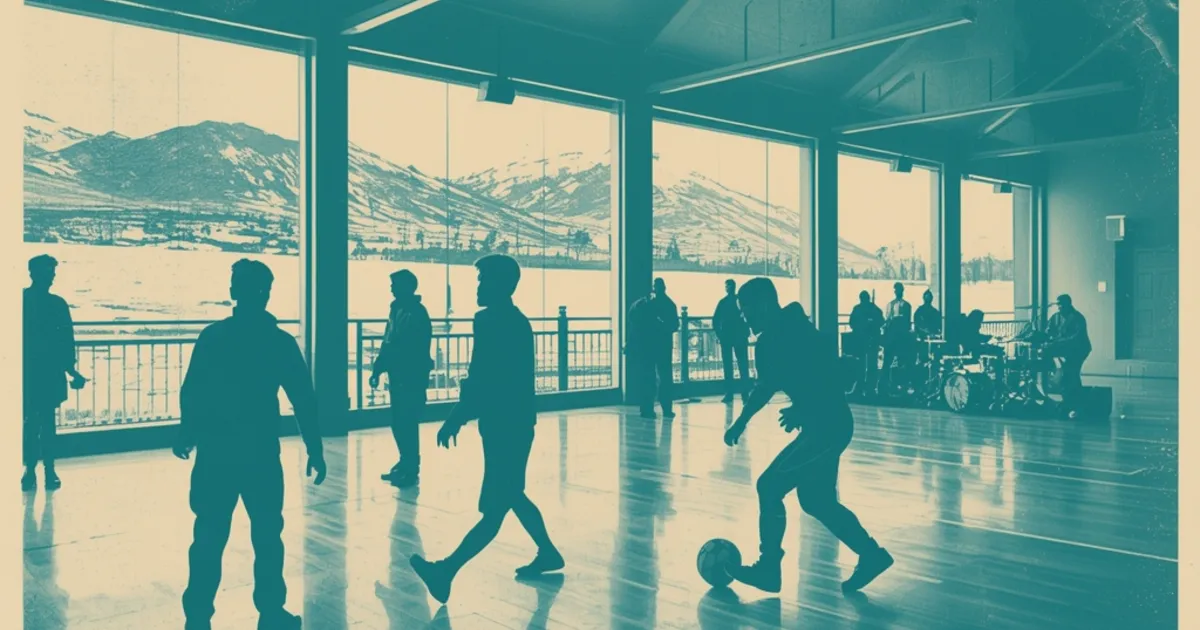
to say yes to. From 1998, councils paid for sport, music and art, parents agreed on the same
rules, and every year the kids were asked how things were going. Teenage drunkenness fell
from one of the highest rates in Europe to one of the lowest.
Where it started
In the late 1990s, Icelandic teenagers drank and smoked more than most in Europe. In 1998,
42% of 15- and 16-year-olds said they had been drunk in the past 30 days. Almost 23% smoked
every day, and 17% had tried hashish (Sigfusdottir et al., 2008).
Warnings weren't working. So with money from the national government and Reykjavik City
Council, a group of politicians, council staff and social scientists tried something else
(Kristjansson et al., 2020a). Their question: what is different about the lives of the kids
who don't drink?
The answers came from surveys, and they were ordinary. Kids who spend time with their
parents, who play organised sport, who aren't out after midnight and whose parents know where
they are, drink and smoke less. Kids with empty evenings and unsupervised parties drink more
(Sigfusdottir et al., 2009).
What Iceland did
The model works on four parts of a young person's life: family, friends, school, and free
time outside school (Kristjansson et al., 2020a). In practice that meant five things.
- Something to do, paid for. Councils increased funding for sport and
activities "dramatically" and made them available to all through vouchers (Kristjansson et
al., 2020a). Today Reykjavik gives every child aged 6 to 18 a Recreation Card worth 75,000
krónur a year, to spend on sport, arts or after-school programs. Its stated aim: every child
takes part "regardless of their economic and social circumstances" (Reykjavíkurborg,
2026).
- Parents on the same page. Through parent groups at school, parents agree
together not to allow drinking in their homes, to prevent unsupervised parties, and to keep to
the same hours. Some take turns walking the neighbourhood at night (Kristjansson et al.,
2020b).
- A curfew everyone knows. Iceland's child protection law says children 12
and under may not be out in public after 8pm without an adult, and children 13 to 16 not after
10pm, unless heading home from a school, sport or youth event. From May to September, when the
nights stay light, both limits move two hours later (Barnaverndarlög nr. 80/2002, art. 92).
Councils advertise the hours widely (Kristjansson et al., 2020b).
- Ask the kids every year. Nearly every student in the age group fills in
an anonymous survey, with response rates of 80% to 90%. Each town gets its own results fast,
and parents, schools and councils plan the next year around them (Sigfusdottir et al.,
2008; Kristjansson et al., 2020b).
- Staff whose job is prevention. Most councils and many schools now pay
people with protected time to do this work (Kristjansson et al., 2020a).
What changed
Among 14- to 16-year-olds, being drunk in the past 30 days fell from 29.6% in 1997 to 3.6%
in 2014. Daily smoking fell from 17.0% to 1.6% (Kristjansson et al., 2016).
| 15- and 16-year-olds, 2015 | Europe | Iceland |
|---|
| Drank alcohol in the past month | 48% | 9% |
| Ever smoked | 46% | 16% |
| Ever used cannabis | 16% | 5% |
(Kristjansson et al., 2020a, from the European school survey)
The things that protect kids moved the right way too. Between 2000 and 2016, the share of
teenagers whose parents knew who they were with in the evenings rose from about 50% to 74%.
The share out after midnight in the past week fell from 80% to 31%. Playing club sport four or
more times a week rose from 26% to 37% (Kristjansson et al., 2020a).
Why it fits Iceland
Iceland has about 395,000 people, a third of them in Reykjavik (Wikipedia, 2026). In a
country that size, the council, the school and the football coach are often neighbours, and
the researchers can present results to the people who run the town in the same room. The
people who built the model name that as a strength: researchers, policy makers, practitioners
and parents working as one, for the long term (Kristjansson et al., 2020a).
It also treats teenagers' time as a shared job. Parents who walk the streets on a Friday
night aren't watching their own child. They're watching everyone's. The curfew isn't one
strict family's rule; it's the town's rule, so no teenager is the only one going home at 10.
What the evidence can and can't say
The results are striking, and they're mostly from surveys taken at different times, not
from a trial. Iceland's own researchers say the drop "needs to be considered in light of the
correlational data" (Sigfusdottir et al., 2009). Other things changed in those years as
well.
The strongest test compared four Icelandic towns that ran the program with seven that
didn't, from 1997 to 2009. Drinking and drunkenness fell in both, but fell more in the towns
running it (Kristjansson et al., 2010). Iceland is small, so ideas spread between towns and
make the difference harder to see.
Researchers outside the team point out that nobody yet knows which parts do the work: the
money, the curfew, the parents or the surveys (Koning et al., 2021). Most published
evaluations come from the team that built the model. In Tarragona, Spain, early results were
mixed: smoking and cannabis use fell between 2015 and 2019, drunkenness fell in only one area,
and vaping rose by a third (Meyers et al., 2023a).
One more point to keep in view. Organised sport and lessons are adult-run. They aren't the
same as free play, which children also need; see Is
risky play good for kids? Iceland's lesson is about empty, unsupervised nights, not about
filling every hour.
Has it been tried here?
The Icelandic team now runs Planet Youth, a Reykjavik-based group that helps other places
set up the model. By 2021 it listed more than 30 countries, including Australia, New Zealand,
Ireland, Canada and Chile, and said the method was used in "hundreds of municipalities"
(Planet Youth, 2021). We couldn't find a published result from any Australian community.
A small American example shows the idea travels. Franklin County, Kentucky, copied
Reykjavik's card as the "YES Card". Within a year, students who got it were almost twice as
likely to play sport, and more than twice as likely to join other organised activities, as
similar students who didn't (Meyers et al., 2023b).
What you can do
- Talk to the other parents. Agree on the same finishing time and on no
unsupervised parties. One parent's rule is easy to argue with. Ten parents' rule is just how
things are.
- Ask your council what a teenager can do on a Friday night, and what it
costs. If the answer is "not much" or "a lot", that's the gap Iceland filled.
- Ask your school whether it surveys students about their evenings, sport
and time with family, and whether parents see the results.
Iceland didn't make teenagers better people. It made the good option the easy one, and
paid for it.
Sources
- Barnaverndarlög nr. 80/2002 [Child Protection Act No. 80/2002], art. 92. Alþingi. althingi.is
- Koning, I. M., de Kock, C., van der Kreeft, P., Percy, A., Sanchez, Z. M., & Burkhart, G. (2021). Implementation of the Icelandic Prevention Model: A critical discussion of its worldwide transferability. Drugs: Education, Prevention and Policy, 28(4), 367–378. doi.org/10.1080/09687637.2020.1863916
- Kristjansson, A. L., James, J. E., Allegrante, J. P., Sigfusdottir, I. D., & Helgason, A. R. (2010). Adolescent substance use, parental monitoring, and leisure-time activities: 12-year outcomes of primary prevention in Iceland. Preventive Medicine, 51(2), 168–171. doi.org/10.1016/j.ypmed.2010.05.001
- Kristjansson, A. L., Sigfusdottir, I. D., Thorlindsson, T., Mann, M. J., Sigfusson, J., & Allegrante, J. P. (2016). Population trends in smoking, alcohol use and primary prevention variables among adolescents in Iceland, 1997–2014. Addiction, 111(4), 645–652. doi.org/10.1111/add.13248
- Kristjansson, A. L., Mann, M. J., Sigfusson, J., Thorisdottir, I. E., Allegrante, J. P., & Sigfusdottir, I. D. (2020a). Development and guiding principles of the Icelandic model for preventing adolescent substance use. Health Promotion Practice, 21(1), 62–69. doi.org/10.1177/1524839919849032
- Kristjansson, A. L., Mann, M. J., Sigfusson, J., Thorisdottir, I. E., Allegrante, J. P., & Sigfusdottir, I. D. (2020b). Implementing the Icelandic model for preventing adolescent substance use. Health Promotion Practice, 21(1), 70–79. doi.org/10.1177/1524839919849033
- Meyers, C. C. A., Mann, M. J., Thorisdottir, I. E., Ros Garcia, P., Sigfusson, J., Sigfusdottir, I. D., & Kristjansson, A. L. (2023a). Preliminary impact of the adoption of the Icelandic Prevention Model in Tarragona City, 2015–2019. Frontiers in Public Health, 11, 1117857. doi.org/10.3389/fpubh.2023.1117857
- Meyers, C. A. C., Mann, M. J., Thorisdottir, I. E., Berry, A., Sigfusson, J., Sigfusdottir, I. D., Eggertsson, G. A., & Kristjansson, A. L. (2023b). Examining the impact of a leisure time intervention on participation in organized out-of-school activities among adolescents: A quasi-experimental study in Franklin County, KY, USA. Health Education Research, 38(4), 320–328. doi.org/10.1093/her/cyad016
- Planet Youth. (2021). Communities. Archived 2021. web.archive.org
- Reykjavíkurborg. (2026). Recreational voucher: Recreation Card. reykjavik.is
- Sigfusdottir, I. D., Kristjansson, A. L., Thorlindsson, T., & Allegrante, J. P. (2008). Trends in prevalence of substance use among Icelandic adolescents, 1995–2006. Substance Abuse Treatment, Prevention, and Policy, 3, 12. doi.org/10.1186/1747-597X-3-12
- Sigfusdottir, I. D., Thorlindsson, T., Kristjansson, A. L., Roe, K. M., & Allegrante, J. P. (2009). Substance use prevention for adolescents: The Icelandic Model. Health Promotion International, 24(1), 16–25. doi.org/10.1093/heapro/dan038
- Wikipedia. (2026). Iceland. wikipedia.org