In July 2001 Portugal stopped treating drug use as a crime. People caught with a small
amount of any drug, heroin included, now go before a panel run by health and social workers
instead of a court. HIV among people who inject drugs collapsed, overdose deaths fell to a fraction of
the European rate, and drug use didn't take off. Twenty-five years on, the model is under strain,
and the reasons are as instructive as the results.
The crisis that forced a change
By the late 1990s Portugal had an estimated 50,000 to 60,000 people addicted to drugs, mostly
heroin, in a country of 10 million. In 1999 it had the highest rate of HIV among people who inject
drugs in the European Union, with about 2,000 new cases a year (Wikipedia, 2026a). In 2001 and
2002, Portugal held 2% of the EU's population and more than half of all its new HIV diagnoses
linked to injecting (Transform, 2021).
Arrests weren't stopping it. In 2001 more than 40% of people serving prison sentences in
Portugal were there for drug offences (Transform, 2021).
A doctor at the centre
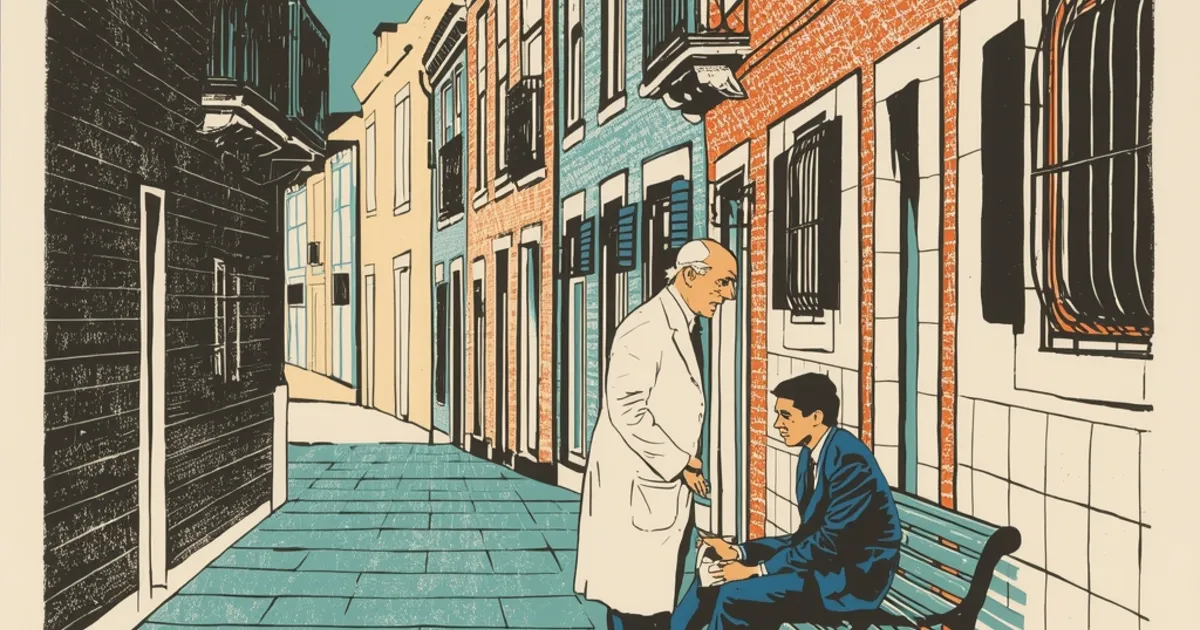
One of the reform's architects is João Goulão, a family doctor. He
qualified in Lisbon in 1978, became a general practitioner in 1983, and from 1987 worked with
people addicted to drugs, including four years at the Taipas Centre, a Lisbon treatment service
set up by the Ministry of Health (Wikipedia, 2026b).
In 1998 the government asked 11 experts, Goulão among them, to design a national strategy.
He summed up where they started: "One of our premises is that drug abusers are ill, not
criminals, and that they need help" (Wikipedia, 2026b). Parliament passed Law 30/2000, and it
took effect in July 2001 (Wikipedia, 2026a).
That premise came easily to a country that already treated health as a right. Portugal's
1976 constitution, written after the 1974 Carnation Revolution ended nearly five decades of
dictatorship (Wikipedia, 2026f), guarantees health protection, and in 1979 the country built a national health service
"free, universal and accessible to all residents" (Wikipedia, 2026c). A people who had rebuilt
their state around the idea that illness is everyone's business found it natural to put addiction
in the same place.
The reform also carried people with it. A 2023 study in Addiction puts the
success down to the way it was made: an electoral mandate, open deliberation, inclusion of the
people who would run it, and evaluation from the start (Moury & Escada, 2023).
How it works
Decriminalised doesn't mean legal. Selling, growing and trafficking remain crimes. What changed
is what happens to the person who uses.
- The limit. Anyone found with no more than ten days' supply of a drug commits
an administrative offence, like a parking fine, not a crime (Wikipedia, 2026a).
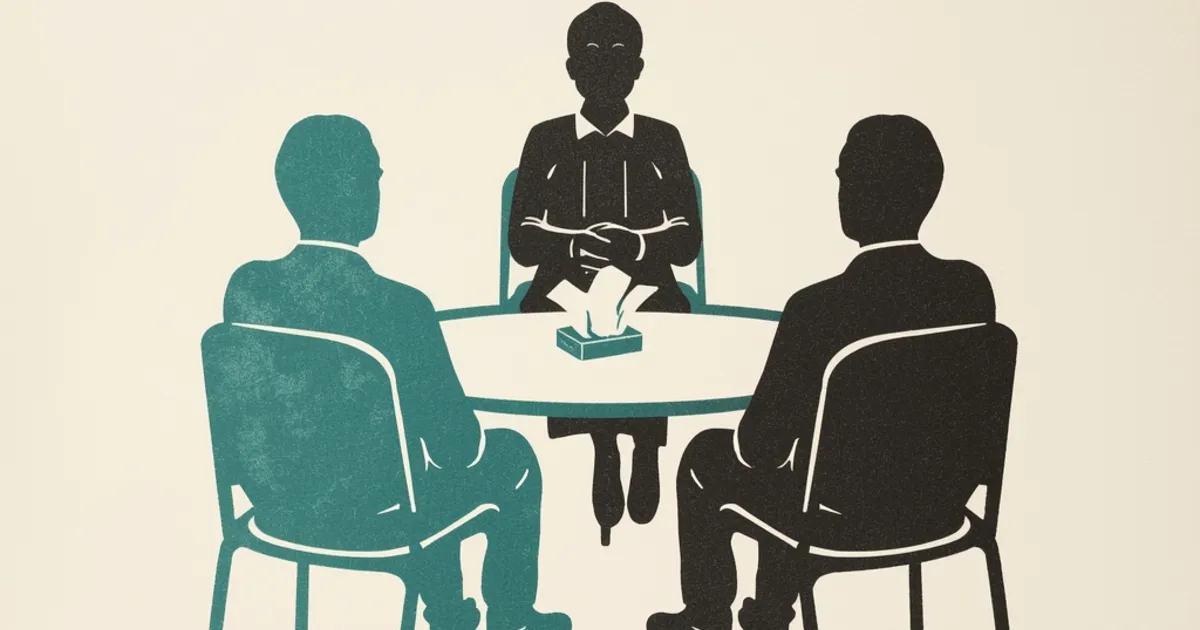
- The panel. Police refer the person to a "dissuasion commission": three people,
typically a social worker, a psychiatrist and a lawyer, with one in each of Portugal's 18
districts (Wikipedia, 2026a).
- The outcome. The panel can fine between €25 and €150, but usually doesn't.
In 2019, 80% of its decisions suspended the case, 19% imposed a penalty and 1% acquitted
(Rêgo et al., 2021). A person who needs treatment is offered it.
Police stayed part of the system. In interviews with 19 Portuguese police executives,
policymakers and officers, the police describe themselves as a route into treatment for people who are
otherwise hard to reach, while still able to deal with disruptive public drug use and chase
traffickers. Over time, police culture came round to it (Moniz et al., 2026).
The results
| Measure | Around 2001 | Around 2019 |
|---|
| New HIV diagnoses linked to injecting | 1,287 | 16 |
| Drug-induced deaths | 76 (2001) | 6 per million adults, against an EU average of 23.7 |
| Sentenced prisoners held for drug offences | over 40% | 15.7% |
(Transform, 2021, drawing on Portuguese and European monitoring data)
The feared surge in drug use never came. Criminologists Caitlin Hughes and Alex Stevens
compared Portugal with Spain and Italy and found no major rise in use, and falls in problem use,
drug-related harm and prison overcrowding (Hughes & Stevens, 2010). Use has stayed below the
European average (Transform, 2021).
One caution: Portugal expanded treatment at the same time. People in substitution treatment
rose from 6,040 to 25,808 (Wikipedia, 2026a), so decriminalisation didn't act alone. Hughes and
Stevens also found both sides of the debate stretching the figures, some calling it a resounding success, others a
disaster (Hughes & Stevens, 2012). The fair reading is that removing the criminal
penalty, backed by treatment, did not make things worse and helped make them much better.
Where it's strained
The model has not stood still, and not all the change is good.
- The institution was folded. The Institute on Drugs and Drug Addiction, which
ran the response as one body, was abolished in 2011. A smaller agency, SICAD, took over policy and
treatment passed to regional health administrations (Rêgo et al., 2021).
- Courts pushed back. A 2008 Supreme Court judgment made possession above
the ten-day limit a crime again, and the decade after it saw more people who use drugs sentenced
to jail (Rêgo et al., 2021).
- Harm reduction lagged. Lisbon opened the country's first drug consumption room
only in May 2021 (Rêgo et al., 2021). During COVID, Porto took a restrictive line while
Lisbon leaned on harm reduction, and people in Lisbon found services easier to reach
(Vale Pires et al., 2025).
- Money fell away. Reduced funding was followed by more visible drug use in
Portuguese cities by 2023 (Wikipedia, 2026d).
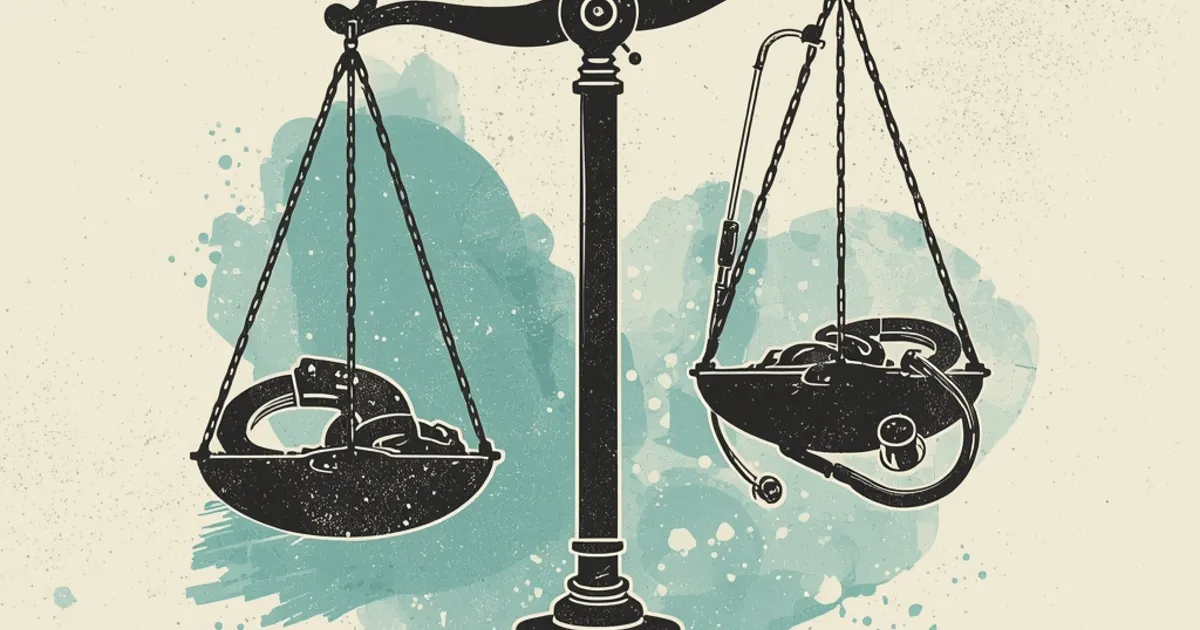
None of this shows the idea failed. It shows what happens when the health half of a health
policy is starved. Oregon ran a version of the test: it decriminalised possession of all drugs in
February 2021, then made possession of hard drugs a crime again from September 2024 after a public
backlash (Wikipedia, 2026e). Decriminalisation on its own is a law change. Portugal's results came
from the law change plus the doctors, panels and treatment places behind it.
What Australia has done
Australia spends most of its drug money on policing. The breakdown is in
Where does Australia's drug policy money go?
One place has started down Portugal's road. In October 2023 the ACT became the first
Australian jurisdiction to decriminalise possession of small amounts of several illicit drugs.
Police can send a person to a health education session or issue a $100 fine; supply remains a
crime. A year later most people who use drugs in Canberra knew about the change, but many
thought it meant drugs were now legal, or that police would do nothing (Sutherland et al., 2026).
The law moved; the explaining hasn't caught up.
What you can check
- Look up what happens in your state or territory if someone is caught with a small amount.
In most of Australia it's still a criminal offence, with a diversion scheme that may or may not
apply.
- When someone says "Portugal legalised drugs", check it: Portugal decriminalised use, and
selling is still a crime.
- When someone says Portugal's model failed, ask which part: the law, or the funding for
the treatment behind it.
Sources
- Hughes, C. E., & Stevens, A. (2010). What can we learn from the Portuguese decriminalization of illicit drugs? British Journal of Criminology, 50(6), 999–1022. doi.org
- Hughes, C. E., & Stevens, A. (2012). A resounding success or a disastrous failure: Re-examining the interpretation of evidence on the Portuguese decriminalisation of illicit drugs. Drug and Alcohol Review, 31(1), 101–113. doi.org
- Moniz, M., Ribeiro, B., Thompson, E., & Del Pozo, B. (2026). The Portuguese police experience with drug decriminalisation. Policing and Society. doi.org
- Moury, C., & Escada, M. (2023). Understanding successful policy innovation: The case of Portuguese drug policy. Addiction, 118(5), 967–978. doi.org
- Rêgo, X., Oliveira, M. J., Lameira, C., & Cruz, O. S. (2021). 20 years of Portuguese drug policy: Developments, challenges and the quest for human rights. Substance Abuse Treatment, Prevention, and Policy, 16(1), 59. doi.org
- Sutherland, R., Graham, C., Hughes, C. E., Olsen, A., Gough, C., King, C., & Peacock, A. (2026). High awareness, low clarity: Knowledge of the Australian Capital Territory's multi-drug decriminalisation reform among people who use illicit drugs. Drug and Alcohol Review. doi.org
- Transform Drug Policy Foundation. (2021). Drug decriminalisation in Portugal: Setting the record straight. transformdrugs.org
- Vale Pires, C., Curado, A., Fuertes, R., Carvalho, M. C., & Valente, H. (2025). City-level drug policies in Portugal: COVID-19 as analyzer. Harm Reduction Journal, 22, 29. doi.org
- Wikipedia. (2026a). Drug policy of Portugal. wikipedia.org
- Wikipedia. (2026b). João Goulão. wikipedia.org
- Wikipedia. (2026c). Serviço Nacional de Saúde. wikipedia.org
- Wikipedia. (2026d). Drug liberalization. wikipedia.org
- Wikipedia. (2026e). Oregon Ballot Measure 110. wikipedia.org
- Wikipedia. (2026f). Carnation Revolution. wikipedia.org