Not simply. There is no good evidence that depression is a plain shortage of serotonin. About one in four people with depression carry low-grade inflammation in their blood, and trials show that exercise and a better diet reduce symptoms.
The "chemical imbalance" story
For decades, people with depression heard that their brain didn't make enough serotonin, and that antidepressants topped it up. In 2022, a team led by psychiatrist Joanna Moncrieff reviewed the research reviews on it: serotonin levels in blood and spinal fluid, receptors, the serotonin transporter gene, and experiments that lower serotonin on purpose. They found no consistent evidence that depression is caused by low serotonin.
The review drew a sharp reply. In 2023, more than 30 psychiatrists and scientists argued that it picked its studies selectively and oversimplified. Serotonin, they said, is still involved in depression, even if not as a simple shortage.
Both sides agree on two things. Almost no researcher still holds the "too little serotonin" story in its simplest form. And the review didn't test whether antidepressants work; it looked at the cause, not the treatment.
If you take an antidepressant, don't stop suddenly because of anything you read. Stopping can cause withdrawal symptoms. Talk to your doctor first.
Inflammation: part of the answer for some people
Inflammation is the immune system's alarm. Short bursts heal cuts and fight infection. Low-grade inflammation that never switches off is linked to heart disease, diabetes and, it turns out, depression.
A blood test for C-reactive protein (CRP) measures it. A 2019 review pooled studies of more than 13,500 people with depression and 155,000 without. It found:
- 27% of people with depression had CRP above 3 mg/L, the usual cut-off for low-grade inflammation.
- 58% had CRP above 1 mg/L.
- People with depression were about one and a half times as likely to have raised CRP as people without it.
So inflammation is common in depression, but most people with depression don't have it. It looks like one route into depression, not the whole story.
A 2013 review traced where that inflammation comes from, and the list reads like modern life: chronic stress, poor diet, obesity, sitting still, smoking, poor sleep and low vitamin D.
The gut is part of it
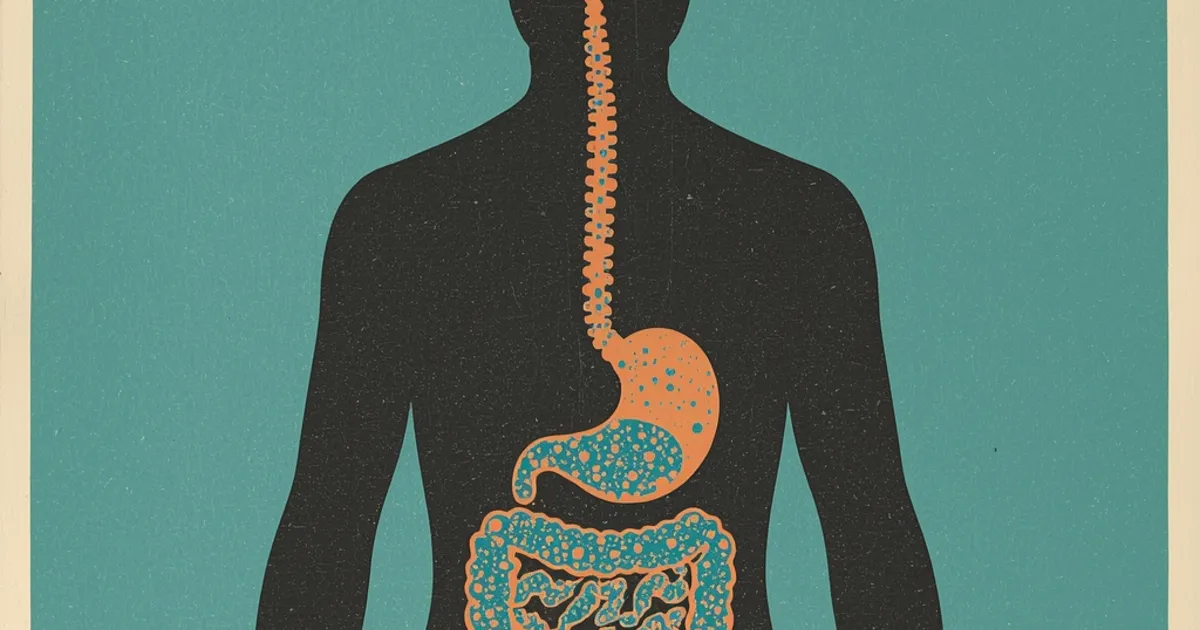
Much of the body's serotonin is made in the gut, not the brain, by cells in the gut lining. It doesn't cross into the brain, so gut serotonin doesn't directly set your mood. The gut and brain still talk, through nerves, the immune system and chemicals that gut bacteria make.
Two animal studies show how close the link is:
- In 2015, Caltech researchers found that certain gut bacteria signal the gut lining to make serotonin. Mice raised with no gut bacteria made less.
- In 2016, Irish researchers moved gut bacteria from people with depression into rats. The rats began showing signs of depression and anxiety, including losing interest in things they normally enjoy.
These are animal studies. They show the gut can shape mood; they don't yet show which human treatments work.
What changes symptoms in trials
| Change | What the evidence shows |
|---|
| Exercise | A 2023 review of 97 reviews, covering 1,039 trials and more than 128,000 people, found physical activity had a medium-sized effect on depression. The benefit was largest in people with depression, and higher-intensity activity helped more. |
| Diet | In the Australian SMILES trial, adults with moderate to severe depression saw a dietitian seven times over 12 weeks to eat more vegetables, fruit, whole grains, legumes, fish and olive oil, and less processed food. 32% recovered, against 8% of a comparison group given social support. |
SMILES was small, with 67 people, and bigger trials are needed. Both findings point the same way: the body and the mind are one system.
What you can do
- Move most days. Walking counts; harder effort helps more.
- Eat mostly whole foods: vegetables, fruit, beans, whole grains, fish, olive oil. Cut back on packaged and processed food.
- Protect sleep and time with other people. Both feed into stress and inflammation.
- If you're depressed, ask your GP whether a blood test for inflammation (CRP) makes sense, and about exercise or dietitian referrals alongside other treatment.
- If you are in crisis in Australia, call Lifeline on 13 11 14.
Sources
- Moncrieff, J., Cooper, R. E., Stockmann, T., Amendola, S., Hengartner, M. P., & Horowitz, M. A. (2023). The serotonin theory of depression: A systematic umbrella review of the evidence. Molecular Psychiatry, 28(8), 3243–3256. https://doi.org/10.1038/s41380-022-01661-0
- Jauhar, S., Arnone, D., Baldwin, D. S., et al. (2023). A leaky umbrella has little value: Evidence clearly indicates the serotonin system is implicated in depression. Molecular Psychiatry, 28(8), 3149–3152. https://doi.org/10.1038/s41380-023-02095-y
- Osimo, E. F., Baxter, L. J., Lewis, G., Jones, P. B., & Khandaker, G. M. (2019). Prevalence of low-grade inflammation in depression: A systematic review and meta-analysis of CRP levels. Psychological Medicine, 49(12), 1958–1970. https://doi.org/10.1017/S0033291719001454
- Berk, M., Williams, L. J., Jacka, F. N., et al. (2013). So depression is an inflammatory disease, but where does the inflammation come from? BMC Medicine, 11, 200. https://doi.org/10.1186/1741-7015-11-200
- Yano, J. M., Yu, K., Donaldson, G. P., et al. (2015). Indigenous bacteria from the gut microbiota regulate host serotonin biosynthesis. Cell, 161(2), 264–276. https://doi.org/10.1016/j.cell.2015.02.047
- Kelly, J. R., Borre, Y., O'Brien, C., et al. (2016). Transferring the blues: Depression-associated gut microbiota induces neurobehavioural changes in the rat. Journal of Psychiatric Research, 82, 109–118. https://doi.org/10.1016/j.jpsychires.2016.07.019
- Singh, B., Olds, T., Curtis, R., et al. (2023). Effectiveness of physical activity interventions for improving depression, anxiety and distress: An overview of systematic reviews. British Journal of Sports Medicine, 57(18), 1203–1209. https://doi.org/10.1136/bjsports-2022-106195
- Jacka, F. N., O'Neil, A., Opie, R., et al. (2017). A randomised controlled trial of dietary improvement for adults with major depression (the 'SMILES' trial). BMC Medicine, 15, 23. https://doi.org/10.1186/s12916-017-0791-y




,_Mo_i_Rana,_Norway_2017-10-09_a.jpg)
