About an hour a day. In a study of more than a million adults, people who sat more than eight hours a day but did 60 to 75 minutes of moderate activity had no higher risk of early death than people who barely sat. Every step up from very little helps, and walking counts.
A body built to keep going
Humans are slow sprinters but unusually good long-distance movers. In 2004, biologists Dennis Bramble and Daniel Lieberman listed the features that suit us to running and walking long distances: springy tendons in the leg and foot, a ligament that steadies the head, big buttock muscles that fire when we run, and sweat that cools us. The fossil record suggests these features appeared about two million years ago.
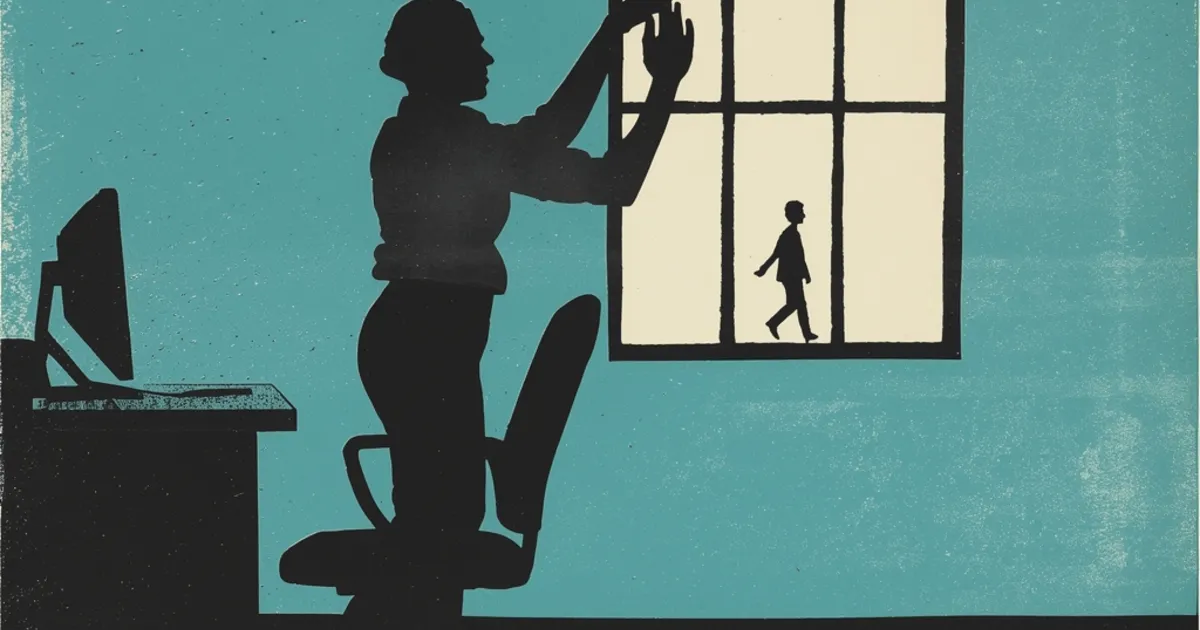
A body shaped for hours of daily movement now spends much of the day in a chair. The question is how much that matters, and how much movement makes up for it.
Sitting and early death
A 2015 review in the Annals of Internal Medicine pooled studies of sitting time. It found that long hours of sitting went with higher rates of early death, heart disease, cancer and type 2 diabetes, even after taking exercise into account.
A larger study in The Lancet in 2016 asked the next question: can exercise cancel it out? Researchers pooled data from more than a million adults followed for up to 18 years.
| Group | Risk of death during the study, compared with sitting under 4 hours a day and very active |
|---|
| Sat over 8 hours a day, very active | No clear increase (4%, within the margin of error) |
| Sat under 4 hours a day, barely active | 27% higher |
| Sat over 8 hours a day, barely active | 59% higher |
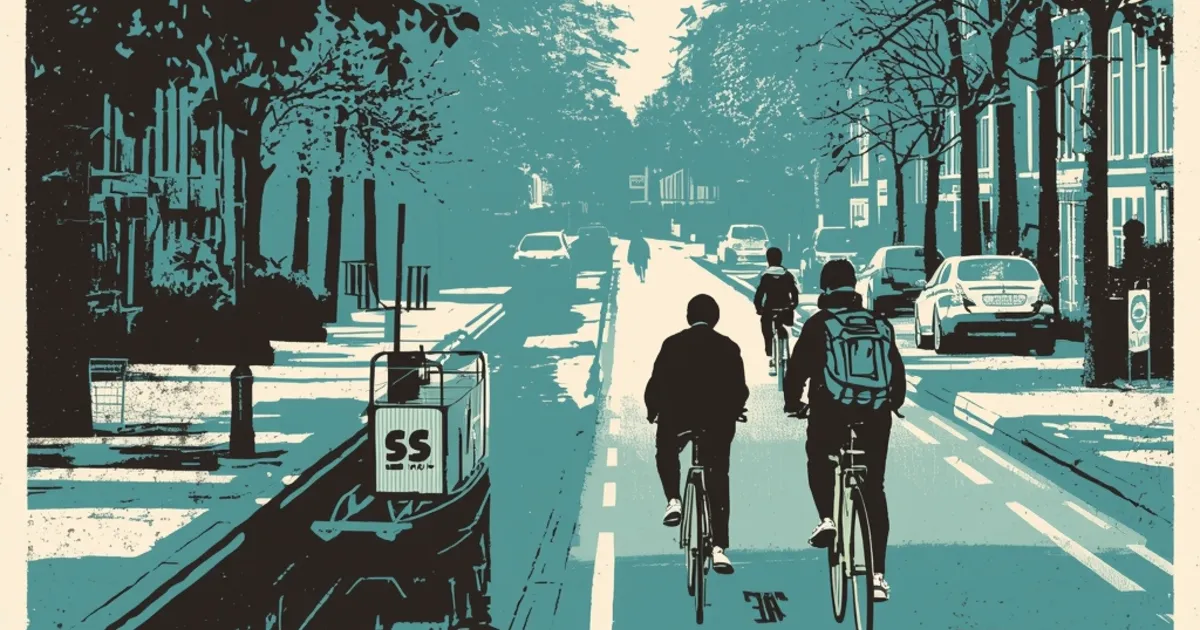
"Very active" meant about 60 to 75 minutes of moderate activity a day, such as brisk walking or cycling. The authors concluded that this much activity seems to eliminate the extra risk of long sitting. Television was the exception: watching five or more hours a day raised risk even in the most active group.
So low activity mattered more than sitting itself. A person who sits little but barely moves is still at risk.
Steps count, and you don't need 10,000
A 2022 study pooled step-counter data from 47,471 adults in 15 studies. Compared with people averaging about 3,500 steps a day, those in higher groups had a 40 to 53% lower risk of death during follow-up. The benefit kept rising up to about 6,000 to 8,000 steps a day for people over 60, and 8,000 to 10,000 for younger adults, then levelled off.
The largest gain comes from moving out of the least active group, not from chasing a big number.
Moving more doesn't mean burning much more
Exercise helps less with weight than many people expect. In 2012, anthropologist Herman Pontzer measured energy use in Hadza hunter-gatherers in Tanzania, who walk and dig for hours every day. Allowing for body size, they burned about as many calories a day as Western office workers. A 2016 study of more than 300 adults found that daily energy use rises with activity at first, then plateaus: the body seems to adjust, spending less elsewhere.
So movement's benefits come mostly from what it does to the heart, blood sugar, muscles and mood, not from calories burned. Other researchers still debate how strongly the body compensates.
Strength matters too
A study of nearly 140,000 adults in 17 countries found grip strength predicted death better than blood pressure did. Each 5 kg fall in grip strength went with a 16% higher risk of death over about four years. Grip strength is a simple stand-in for overall muscle strength, which the World Health Organization recommends building at least twice a week.
What the guidelines say
The WHO's 2020 guidelines ask adults to do 150 to 300 minutes of moderate activity a week, or 75 to 150 minutes of vigorous activity, plus muscle-strengthening on two or more days, and to sit less. Worldwide, about 27.5% of adults didn't reach even the minimum in 2016. The Lancet study suggests the top of the range, about an hour a day, is what fully offsets a desk job.
What you can do
- Build in walking you don't have to plan: part of the commute, stairs, phone calls on foot.
- If you're under about 3,500 steps a day, aim for 6,000 first. That step brings the largest gain.
- Get up from the desk and the couch at least once an hour.
- Keep TV to fewer than three hours a day.
- Lift, carry, climb or hang from something twice a week: weights, gardening, playground bars.
- If you have a heart condition or haven't been active in years, ask your GP how to start.
Sources
- Bramble, D. M., & Lieberman, D. E. (2004). Endurance running and the evolution of Homo. Nature, 432(7015), 345–352. https://doi.org/10.1038/nature03052
- Biswas, A., Oh, P. I., Faulkner, G. E., et al. (2015). Sedentary time and its association with risk for disease incidence, mortality, and hospitalization in adults: A systematic review and meta-analysis. Annals of Internal Medicine, 162(2), 123–132. https://doi.org/10.7326/M14-1651
- Ekelund, U., Steene-Johannessen, J., Brown, W. J., et al. (2016). Does physical activity attenuate, or even eliminate, the detrimental association of sitting time with mortality? A harmonised meta-analysis of data from more than 1 million men and women. The Lancet, 388(10051), 1302–1310. https://doi.org/10.1016/S0140-6736(16)30370-1
- Paluch, A. E., Bajpai, S., Bassett, D. R., et al. (2022). Daily steps and all-cause mortality: A meta-analysis of 15 international cohorts. The Lancet Public Health, 7(3), e219–e228. https://doi.org/10.1016/S2468-2667(21)00302-9
- Pontzer, H., Raichlen, D. A., Wood, B. M., Mabulla, A. Z. P., Racette, S. B., & Marlowe, F. W. (2012). Hunter-gatherer energetics and human obesity. PLoS ONE, 7(7), e40503. https://doi.org/10.1371/journal.pone.0040503
- Pontzer, H., Durazo-Arvizu, R., Dugas, L. R., et al. (2016). Constrained total energy expenditure and metabolic adaptation to physical activity in adult humans. Current Biology, 26(3), 410–417. https://doi.org/10.1016/j.cub.2015.12.046
- Leong, D. P., Teo, K. K., Rangarajan, S., et al. (2015). Prognostic value of grip strength: Findings from the Prospective Urban Rural Epidemiology (PURE) study. The Lancet, 386(9990), 266–273. https://doi.org/10.1016/S0140-6736(14)62000-6
- Bull, F. C., Al-Ansari, S. S., Biddle, S., et al. (2020). World Health Organization 2020 guidelines on physical activity and sedentary behaviour. British Journal of Sports Medicine, 54(24), 1451–1462. https://doi.org/10.1136/bjsports-2020-102955
- Guthold, R., Stevens, G. A., Riley, L. M., & Bull, F. C. (2018). Worldwide trends in insufficient physical activity from 2001 to 2016: A pooled analysis of 358 population-based surveys with 1·9 million participants. The Lancet Global Health, 6(10), e1077–e1086. https://doi.org/10.1016/S2214-109X(18)30357-7




,_Mo_i_Rana,_Norway_2017-10-09_a.jpg)
