Why does being hit hurt a child but settle some adults?
The same act can injure a child and settle an adult. What decides it is control and repair, not the act.

13 min read
 articleworld4u
Art: Omxus Press
Put a rat alone in a metal cage with a bottle of morphine water and it drinks. Put it in a park full of other rats and it mostly drinks plain water. A war ran the human version: most soldiers hooked on heroin in Vietnam put it down once they got home.
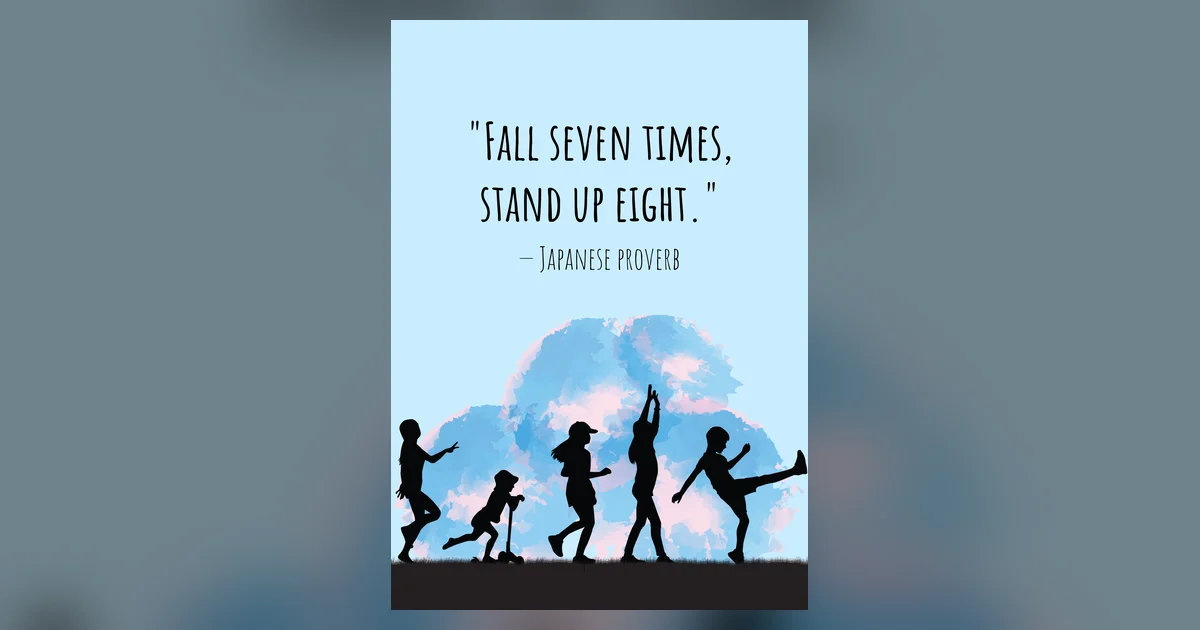
Fall seven times, stand up eight. It's a good proverb, and it leaves out the ground you stand up on.
Bruce Alexander taught the psychology of addiction at Simon Fraser University, in British Columbia. In the 1970s the standard experiment went like this: put a rat alone in a small metal cage, give it a lever or a bottle of drug, and watch it dose itself. The results were taken as proof that the drug does the work.
Alexander noticed the cage. Rats are social animals, and a solitary metal box is a miserable place to live. What if the misery, not the morphine, drove the drinking? So he and his colleagues built something else.
Rat Park was a plywood colony with 200 times the floor area of a standard lab cage. It held 16 to 20 rats of both sexes, with food, balls and wheels to play on, and room to mate (Hadaway et al., 1979). Every rat, in the park or in a cage, could drink from two dispensers: a sweetened morphine solution, or plain tap water.
The caged rats drank far more of the drug. In one condition, caged males drank 19 times as much morphine as the males in the park (Hadaway et al., 1979). In another experiment, rats were given nothing but morphine solution for 57 days, long enough to become dependent, then moved into Rat Park and offered a choice. They chose the water (Alexander et al., 1981).
The chemical was the same in both places. How much the rats took moved with where they lived.
At about the same time, the United States was running the human version without meaning to. It sent young men to a country where heroin was cheap, strong and everywhere, into fear, boredom and a year far from home.
By 1971 Washington was alarmed. President Nixon declared a war on drugs and set up a White House drug office under psychiatrist Jerome Jaffe. Its answer was Operation Golden Flow: from September 1971, no soldier could board a plane home until he passed a urine test for heroin. Anyone who failed went through detox and tried again (Robins et al., 1975).
The federal government also paid Lee Robins, a professor at Washington University in St. Louis, to follow the men home. Her team interviewed 898 returned soldiers, a random sample of Army enlisted men (Robins et al., 1975). The numbers frightened people:
| US soldiers in Robins' study | Share |
|---|---|
| Used heroin in Vietnam | 34% |
| Showed signs of heroin dependence in Vietnam | 20% |
| Tried heroin again in their first year home | 10% |
| Became re-addicted in their first year home | 1% |
(Hall & Weier, 2017)
One in five men had come to depend on heroin. The feared wave of addicted veterans never arrived. Back in the United States, one in a hundred became re-addicted in the first year. Men who by every clinical measure had a serious dependence mostly walked away from it when everything around them changed at once: the country, the price, the supply, the danger and the company (Hall & Weier, 2017).
The usual story says the drug rewires the brain and the person is caught, needing more whatever else happens in their life. The Vietnam numbers don't fit that story. If the chemical alone explained dependence, a plane ride should not have mattered. It mattered more than months of daily use.
Hall and Weier, reviewing Robins' work forty years on, list what drove use beyond the drug itself: price, availability, how the drug is taken, what else is on offer, social norms, education and life circumstances (Hall & Weier, 2017). In Vietnam heroin was cheap, pure and normal among the men around you. At home it was none of those things.
Alexander took the idea further. In The Globalization of Addiction (2008), he argues that addiction grows in fragmented societies, where people use it to adapt to being cut off from family, work, land and belonging (Alexander, 2008). A person in that state is the rat in the cage.
Portugal acted on the same idea. From July 2001, possessing a small amount of any drug, up to ten days' supply, stopped being a crime (Hughes & Stevens, 2010). A person caught with it goes before a dissuasion commission of three people: a social worker, a psychiatrist and a lawyer. The question in that room isn't what punishment fits. It's what this person needs.
In the years that followed, drug-related deaths fell and more people entered treatment (Hughes & Stevens, 2010). Researchers still argue over how much of that the law caused, and how well the model has held up since. But it shows what a country looks like when it treats drug use as a matter for a social worker rather than a cell.
Rat Park is one set of experiments, not a law of nature. When Bruce Petrie tried to repeat it in 1996, he couldn't reproduce the effect, and suggested the strain of rat Alexander used may explain the difference (Petrie, 1996). The studies also used few animals.
The story also travelled further than the data. A popular YouTube channel, Kurzgesagt, made a video presenting Rat Park as proof that addiction is simply loneliness, and millions watched it. The channel later took it down and explained why, publicly (Kurzgesagt, 2019). That's a rare and decent thing to do.
The fair reading: surroundings change how much of a drug people and rats take. Neither study shows surroundings are the only thing that matters. Dependence is real, withdrawal is real, and fentanyl isn't morphine in sugar water. Hall and Weier warn that Robins' work is often quoted selectively to suit one agenda or another, and should be read in the original (Hall & Weier, 2017).
The hopeful part of both results is the same. No rat in Rat Park and few of the soldiers were fixed one at a time. Their whole situation changed, and use fell with it.
If you're in the cage yourself, you aren't weak. Ring the National Alcohol and Other Drug Hotline, 1800 250 015, and ask what could change around you as well as in you.
Alexander built the rats a park and they chose water. The work for the rest of us is building better parks.
Stand up eight, then. Somewhere worth standing.
The same act can injure a child and settle an adult. What decides it is control and repair, not the act.
Listing the causes of an accident is how safety experts find the truth. To an untrained listener it can sound like dodging blame. Four biases explain why.
Photo: NTSBgov, Public domain, via Wikimedia Commons
Small rewards can double blood donations or build kids' eating habits. A fine can make parents later, and cash can halve donors. What decides which.
Photo: Salem State University Archives and Special Collec from Salem, Massachusetts, CC BY 2.0, via Wikimedia Commons

